
Workflow Automation ROI Calculator is a critical tool for organizations seeking to evaluate the financial and operational impact of automation initiatives. A Workflow Automation ROI Calculator enables businesses to quantify cost savings, efficiency improvements, and productivity gains before committing resources to automation.
As enterprises increasingly adopt digital transformation strategies, leadership teams require clear justification for automation investments. This article explains how a Workflow Automation ROI Calculator works, why it is essential for informed decision-making, and how 18Pixels leverages n8n workflow automation to deliver measurable and sustainable ROI.
Understanding a Workflow Automation ROI Calculator
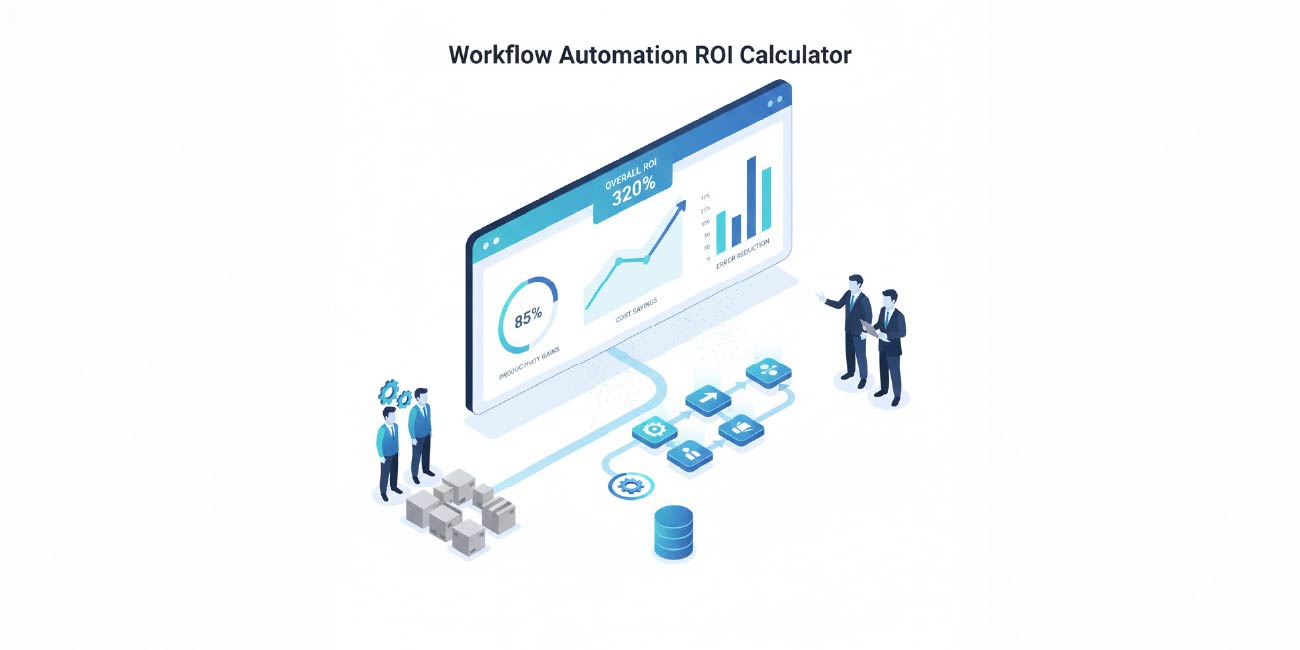
A Workflow Automation ROI Calculator is a structured framework used to assess the return on investment from automating manual and semi-manual business processes. It replaces assumptions with data-driven analysis, allowing organizations to forecast automation outcomes with greater accuracy.
The calculator typically evaluates:
- Time spent on manual process execution
- Cost of human resources involved
- Frequency and impact of errors
- Process turnaround time
- Annual and long-term cost savings
By converting operational inefficiencies into measurable metrics, the calculator supports strategic automation decisions.
Why Organizations Struggle to Justify Automation Investments
Limited Visibility Into Financial Impact
While automation is widely recognized as beneficial, many organizations are unable to clearly demonstrate:
- The exact cost of current manual operations
- The level of savings automation can deliver
- The time required to recover the investment
This lack of clarity often results in delayed or rejected automation initiatives.
Concerns Around Implementation Costs and Complexity
Decision-makers frequently associate automation with:
- High upfront costs
- Complex system integrations
- Extended implementation timelines
A Workflow Automation ROI Calculator mitigates these concerns by clearly outlining cost recovery periods and long-term financial benefits.
How a Workflow Automation ROI Calculator Works
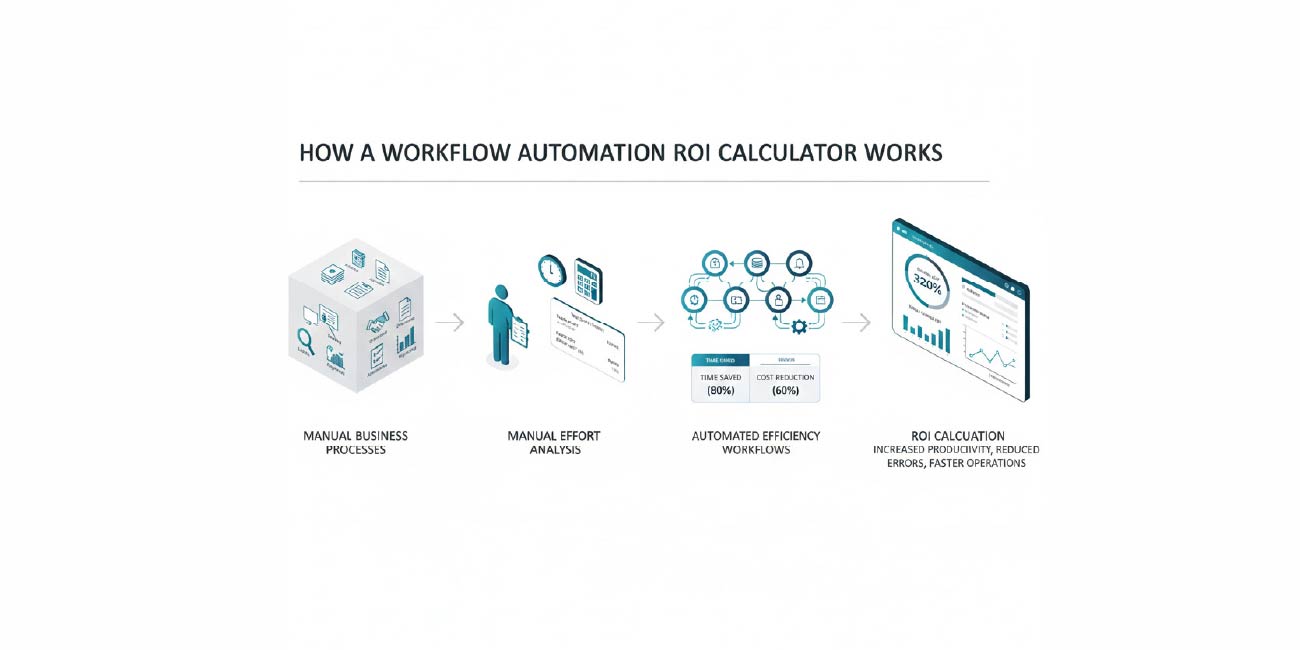
Process Identification and Prioritization
The first step involves identifying repetitive, rule-based processes that are suitable for automation. Common examples include:
- Lead management and assignment
- Invoice and payment processing
- Customer onboarding workflows
- Approval and escalation processes
- Operational reporting and notifications
These processes often deliver the highest automation ROI.
Analysis of Manual Effort and Cost
This phase establishes the baseline by calculating the current cost of manual execution, including:
- Time required per task
- Number of transactions per day or month
- Employees involved in execution
- Cost per resource
This data forms the foundation for accurate ROI estimation.
Automation Efficiency Assessment
Using n8n workflow automation, 18Pixels evaluates how automation will:
- Reduce or eliminate manual intervention
- Minimize errors and rework
- Improve process speed and consistency
- Enable teams to focus on higher-value tasks
This assessment highlights the operational advantages of automation.
ROI Calculation and Financial Impact
The Workflow Automation ROI Calculator then presents:
- Monthly and annual cost savings
- Return on investment percentage
- Payback period
- Long-term productivity and scalability benefits
These insights provide leadership teams with the confidence to proceed with automation.
Workflow Automation ROI Across Key Industries
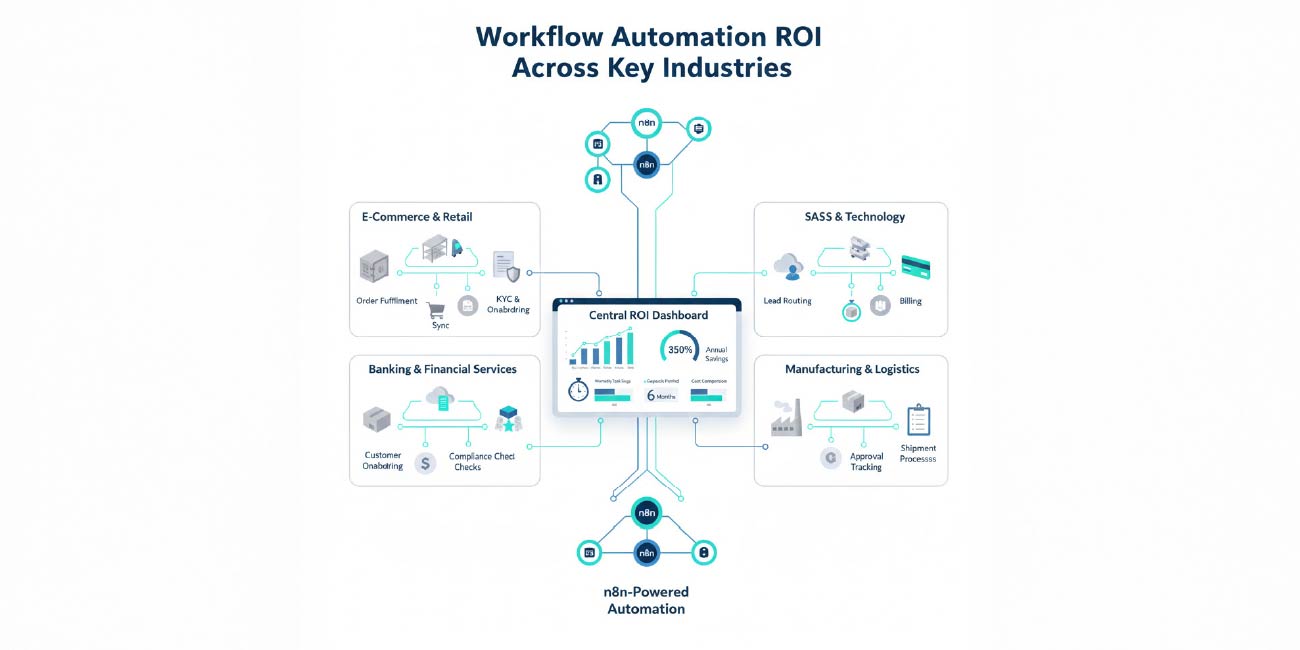
E-Commerce and Retail
E-commerce operations often involve high transaction volumes and time-sensitive processes.
Automated workflows include:
- Order confirmations
- Inventory synchronization
- Refund and return processing
- Customer communication
Business impact: Reduced operational overhead, faster fulfillment, and improved customer satisfaction.
Banking and Financial Services
Financial institutions require precision, compliance, and efficiency.
Automated workflows include:
- KYC and verification processes
- Compliance monitoring
- Transaction alerts
- CRM updates
Business impact: Lower error rates, improved compliance, and accelerated decision-making.
SaaS and Technology Organizations
Technology-driven businesses rely on speed and responsiveness.
Automated workflows include:
- Lead routing and qualification
- Customer onboarding
- Billing and renewal notifications
- Support ticket management
Business impact: Higher conversion rates, improved customer experience, and enhanced team productivity.
Manufacturing and Logistics
Operational efficiency is critical in supply chain-driven environments.
Automated workflows include:
- Purchase order approvals
- Shipment and delivery notifications
- Vendor communication
- Performance reporting
Business impact: Reduced delays, improved coordination, and lower operational costs.
Example: Workflow Automation ROI Calculation
Manual Process Costs
- Average task duration: 15 minutes
- Transactions per day: 40
- Monthly effort: 200 hours
- Cost per hour: ₹500
- Total monthly cost: ₹1,00,000
Automated Process Using n8n
- Average task duration: 2 minutes
- Monthly effort: 27 hours
- Total monthly cost: ₹13,500
ROI Summary
- Monthly savings: ₹86,500
- Annual savings: ₹10,38,000
- Payback period: Less than three months
This illustrates the tangible outcomes delivered by a Workflow Automation ROI Calculator.
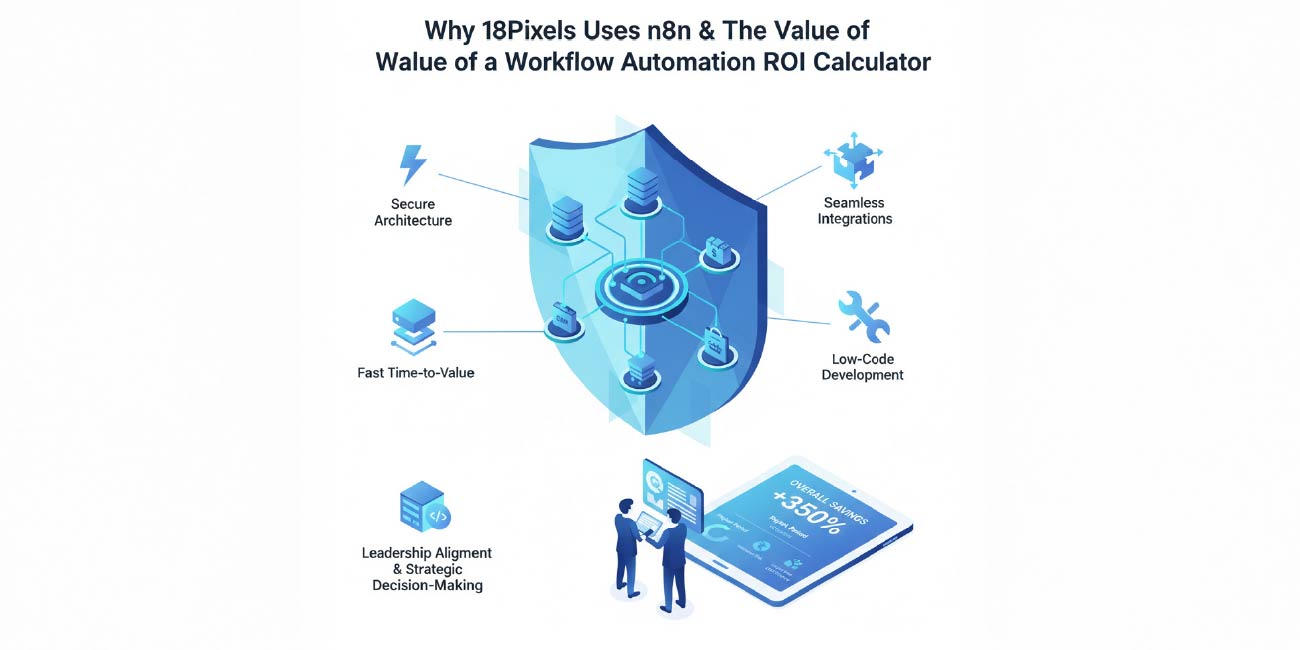
Why 18Pixels Uses n8n Workflow Automation
18Pixels adopts n8n workflow automation to deliver scalable and cost-effective automation solutions. The platform enables:
- Low-code workflow development
- Seamless integration with enterprise tools
- Secure and reliable automation architecture
- Faster time to value
These capabilities allow organizations to achieve measurable ROI without operational disruption.
🔗 Learn more about our automation services:
https://www.18pixels.com/n8n-workflow-automation
Key Benefits of a Workflow Automation ROI Calculator
- Data-driven justification for automation initiatives
- Faster stakeholder and leadership alignment
- Reduced financial risk
- Improved operational predictability
- Sustainable long-term efficiency gains
When to Use a Workflow Automation ROI Calculator
Organizations should apply a Workflow Automation ROI Calculator when:
- Evaluating automation investments
- Planning digital transformation initiatives
- Scaling operations without increasing headcount
- Optimizing existing workflows
- Presenting automation proposals to leadership
Making Automation a Strategic Investment
A Workflow Automation ROI Calculator transforms automation from a theoretical concept into a measurable business strategy. By clearly outlining costs, savings, and payback periods, it empowers organizations to make informed and confident decisions.
At 18Pixels, we help businesses calculate, validate, and realize automation ROI through robust n8n workflow automation solutions, ensuring every investment delivers measurable value.
FAQs
It is a tool that estimates cost savings, time reduction, and productivity gains from automating business processes.
It helps justify automation investments with clear, data-driven ROI and payback timelines.
Repetitive, rule-based, and high-volume processes such as approvals, data entry, invoicing, and reporting.
By eliminating manual effort, reducing errors, speeding up execution, and improving operational efficiency.
n8n enables low-code, scalable, and cost-effective automation with fast deployment and broad integrations.
Most organizations see measurable ROI within 2–6 months, depending on process complexity.
Post Views: 228