
You’ve finally crossed the finish line. After countless hours of planning, designing, and fine-tuning, you’ve launched your new website. It’s live, it’s beautiful, and it’s ready for visitors. While this moment certainly calls for celebration, it’s not the end of the project—it’s the beginning of a new journey.
Think of your new website like a beautiful new home. You wouldn’t just move in and never clean the floors, fix a leaky faucet, or mow the lawn. To keep it valuable and livable, it requires continuous care and attention. Neglect it, and it will slowly fall into disrepair.
This ongoing care is what we call Post Launch Website Support. It’s the most critical factor in transforming your website from a static online sign into a dynamic tool that drives business growth.
What Exactly is Post Launch Website Support?
Simply put, website post-launch support covers all the activities needed to maintain, secure, monitor, and improve your website after website development. It’s a proactive approach to protect your investment and ensure it continues to perform at its best.

This goes far beyond just fixing bugs as they appear. It’s a continuous cycle of improvement that includes:
- Maintenance: Keeping your website’s technical core healthy by updating software, plugins, and themes.
- Security: Actively defending your site against malware, hackers, and potential data breaches.
- Performance: Making sure your site remains fast, responsive, and accessible around the clock.
- Optimization: Continuously refining your content, SEO, and user experience to achieve your business objectives.
Without a solid post-launch plan, businesses risk frustrating their users with slow speeds, facing costly downtime, and slowly vanishing from search engine results.
Why Ongoing Website Support is Absolutely Essential
Launching a website and then forgetting about it is like planting a seed and never watering it. All that initial potential will quickly disappear. Research shows that up to 94% of a user’s first impression is tied directly to your website’s design and functionality. If your site’s performance declines after launch, your brand’s reputation will follow.
Here’s why consistent support is a must-have:
Rock-Solid Security: The internet is full of security risks. The most common way hackers gain access is through outdated software. Regular security updates, malware scanning, and firewall monitoring are vital to protecting your business and earning your customers’ trust.
Exceptional Speed and Performance: A slow website is a major roadblock for visitors. Recent Google data from 2023 shows that websites loading in under 2.5 seconds can experience up to 70% higher conversion rates. Optimizing performance through caching, image compression, and clean code directly boosts your revenue and search rankings.
Smarter Decisions with Analytics: How do you know if your website is actually delivering results? Tools like Google Analytics 4 act as your eyes and ears. They reveal who your visitors are, how they find your site, and what they engage with, giving you the data needed to make informed business decisions.
Long-Term SEO Success: SEO is not a “set it and forget it” task. Search engine algorithms are constantly changing, competitors are updating their strategies, and new keywords become relevant. Continuous optimization of your content, technical elements, and meta tags is necessary to climb—and maintain—a top spot in search results.
A Perfect User Experience (UX): Nothing frustrates a visitor more than a broken link, a form that won’t submit, or a page that takes forever to load. Studies from 2024 confirm that 88% of online shoppers will not return to a site after a bad experience. Regular bug fixes and user-focused improvements ensure every visitor has a smooth and positive journey.
The Ultimate Post-Launch Checklist for Your Website
Feeling a bit overwhelmed? No problem. Follow this step-by-step checklist to navigate the first few weeks and build a strong routine for lasting success.
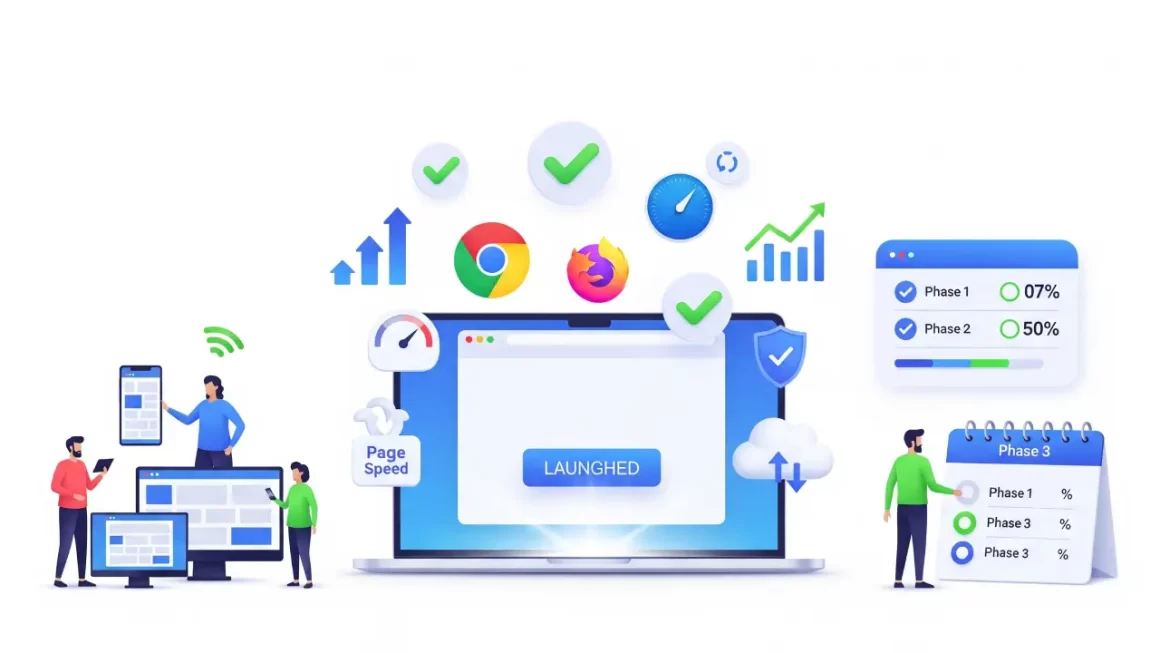
Phase 1: The Immediate Health Check (First 48 Hours)
- ✅ Test Every Function: Click on every link and button. Fill out every contact form. If you have an online store, complete a test purchase. Verify that user logins work perfectly. Assume nothing.
- ✅ Check Across All Devices: Open your site on different smartphones, tablets, and desktops. Test it on various browsers like Chrome, Safari, and Firefox to ensure it looks and works great for everyone.
- ✅ Verify Your Tracking Tools: Double-check that Google Analytics 4, Google Search Console, and any other tracking codes (like a Meta Pixel) are installed correctly and actively gathering data.
Phase 2: Building a Strong Foundation (First Month)
- ✅ Analyze and Boost Page Speed: Use tools like GTmetrix or Google’s PageSpeed Insights to test your site’s speed. Make initial improvements by compressing images, setting up a Content Delivery Network (CDN), and enabling browser caching.
- ✅ Perform a Technical SEO Audit: Make sure your XML sitemap is submitted to Google. Check your robots.txt file for errors, ensure all pages have unique meta titles and descriptions, and implement basic schema markup.
- ✅ Strengthen Your Security: Confirm your SSL certificate is active. Install a trusted security plugin or configure a firewall. Most importantly, schedule regular, automated backups of your website files and database.
- ✅ Ask for User Feedback: Encourage your first visitors to share their thoughts through a simple survey or contact form. Early feedback is incredibly valuable for spotting areas for improvement.
Phase 3: The Rhythm of Growth (Ongoing)
- ✅ Monitor Performance and Uptime: Use a service to get alerts if your website goes down. Regularly review your site speed and analytics to spot and fix problems before they affect your users.
- ✅ Keep Your Content Fresh: A static website feels outdated. Regularly publish blog articles, update your services, and refresh your calls-to-action (CTAs) to keep users and search engines engaged.
- ✅ Create a Support Plan: Decide who will handle ongoing maintenance. Will you manage it in-house, or will you partner with a professional agency for a dedicated website support plan?
What Do Professional Website Support Services Cover?
For most businesses, outsourcing website support is the smartest and most cost-effective choice. A professional team ensures your digital presence is always in top shape. These services often include:
- Technical Assistance: On-call support for bug fixes, troubleshooting, and performing regular updates to your CMS (like WordPress), themes, and plugins.
- Performance Monitoring: Constant tracking of your website’s speed, uptime, and traffic to proactively make adjustments for peak performance.
- Security and Backups: Proactive security scans, firewall management, and reliable, off-site backups so you can quickly recover from any disaster.
- SEO and Marketing Help: Ongoing content optimization, keyword analysis, and strategic advice to help you improve your visibility in search results.
- Growth and Scalability: Help with adding new features, integrating third-party tools, or expanding functionality as your business evolves.
Your Roadmap for Long-Term Website Success
A clear plan helps you move from simply fixing problems to strategically growing your online presence. Here’s a sample roadmap:
- First Month: Your focus is on stabilization. Fix any bugs that pop up, gather user feedback, and make sure your analytics and SEO fundamentals are solid.
- First 3 Months: Shift your focus to optimization. Use the data you’ve collected to improve your SEO, boost page speed, and refine the user journey to increase engagement.
- First 6 Months: Now it’s time to expand. Start creating new content like blog posts or case studies, build new landing pages for marketing campaigns, and run A/B tests to improve your conversion rates.
- Ongoing: Settle into a rhythm of evolution. Perform regular maintenance, run digital marketing campaigns, and plan for future upgrades to stay competitive.

Final Thoughts: Your Website is a Journey, Not a Destination
The day your website goes live is just Day One. Its real value is not measured on launch day, but in the months and years that follow. A truly successful website is defined by how well you navigate its post-launch journey—from security and performance to user experience and growth.
By committing to a strong post-launch plan and consistent support, you ensure your most important digital asset works tirelessly for you, drives real results, and grows right alongside your business.
👉 Is your website secure, fast, and optimized for success? Don’t leave it to chance. Contact us today to discuss a post-launch support plan tailored to protect your investment and accelerate your growth – Click Here
FAQs
What should I do immediately after launching a website?
Right after launch, test all site functions, check performance across devices, verify tracking tools (GA4, Search Console), and fix any errors.
Why is website post-launch support important?
It ensures your site stays secure, fast, and optimized. Without ongoing support, you risk slow speeds, security breaches, and lost traffic.
How often should I update my website after launch?
At least monthly—update plugins, security patches, and content regularly. For SEO and UX growth, ongoing weekly checks are ideal.
What do website support services include?
They cover security monitoring, bug fixes, backups, speed optimization, SEO improvements, and scalability support for long-term success.
What is included in a post-launch website checklist?
A checklist usually includes functionality testing, SEO setup, speed optimization, security checks, analytics setup, and backup configuration.
How long does website post-launch support last?
Support is continuous. The first 3–6 months are critical, but ongoing maintenance should be part of your long-term digital strategy.
What happens if I skip website maintenance after launch?
Your site may face downtime, slow performance, broken features, and security risks—hurting both user trust and search rankings.
Can I manage website support myself?
Yes, if you have technical skills. However, most businesses prefer outsourcing website support services to ensure expert handling and 24/7 monitoring.
Don’t stop here—discover more in our latest blog –
Conversion by Design: Real Data on UI/UX Design Impact
The Iceberg Effect in Software Projects: Why Your Timeline is Wrong
API-First Development: The Blueprint for Modern Software Architecture
Post Views: 1052