Imagine building a house without a blueprint. The electricians, plumbers, and carpenters all show up at once, each with a different idea of where the walls should go. The result? Chaos, costly rework, and a structure that’s anything but stable. For years, this is how many of us built software—coding the application first and then “bolting on” an API as an afterthought.
API-First Development flips that chaotic model on its head. It’s a strategic shift that says we design the blueprint—the API—before a single line of application code is written. This approach is more than just a trend it’s rapidly becoming the foundational principle for building smarter, faster, and more scalable systems.
Why an API-First Architecture is the Future
Traditional development often treats APIs as second-class citizens, created only after the primary application is complete. This inevitably leads to clunky, inflexible integrations that are difficult to maintain and scale.
The API-first approach transforms the API from an afterthought into the cornerstone of your architecture. By defining the API contract first, you create a central source of truth that governs how different services and applications will interact.
This blueprint-driven philosophy makes your systems inherently more reusable and vastly improves the developer experience—two critical ingredients for building agile, future-ready platforms.

The Tangible Benefits of Thinking API-First
Adopting this methodology isn’t just an academic exercise; it delivers powerful, real-world advantages that forward-thinking businesses are already capitalizing on.
1. Drastically Faster Time-to-Market and Lower Costs
When your API is defined upfront, it acts as a contract between teams. This means you can automatically generate mock servers, comprehensive documentation, and even client SDKs before the backend is even built. Your front-end and back-end teams can work in parallel, not in sequence, effectively eliminating one of the most common bottlenecks in software development. Furthermore, by designing APIs for reusability, you stop reinventing the wheel for every new project, which significantly cuts down on redundant work and development costs.
2. Seamless Collaboration and Parallel Workflows
Say goodbye to the “waiting game.” With a clear API contract in place, your front-end team knows exactly what data to expect, and your back-end team knows exactly what to build. This shared understanding fosters harmony and efficiency.
Different teams, whether building a web app, a mobile app, or integrating with a partner, can all work simultaneously against the same stable specification. This parallel workflow doesn’t just boost productivity; it cultivates a more collaborative and agile engineering culture.
3. Building a Resilient, Scalable, and Flexible Foundation
An API-first mindset naturally encourages a modular, loosely-coupled architecture, which is the bedrock of modern microservices. When your system is a collection of well-defined, independent services connected by APIs, it becomes incredibly resilient.
You can update, scale, or even replace a single service without bringing the entire system down. This architectural flexibility is crucial for adapting to new market demands, handling growth, and ensuring your platform remains robust for years to come.
4. A Superior Developer Experience That Fuels Velocity
Let’s be honest: happy, productive developers build better products. API-first development inherently treats APIs as first-class products, designed with their primary consumer—the developer—in mind. Clean, predictable specifications, auto-generated documentation, and reliable mock environments remove friction from the development process.
This focus on developer experience (DX) empowers your team to iterate quickly, experiment confidently, and achieve a level of velocity that’s simply not possible with a traditional, API-last approach.

The Next Frontier: Emerging Trends in API Development
The world of APIs is constantly evolving. Here are the trends shaping the future of API-first design that every leader should be watching.
- Composition APIs: As systems become more distributed, a single user action might require data from multiple microservices. Composition APIs (sometimes called experience APIs) act as an intelligent aggregator, bundling multiple backend calls into a single, cohesive API endpoint. This simplifies life for front-end developers and dramatically improves application performance.
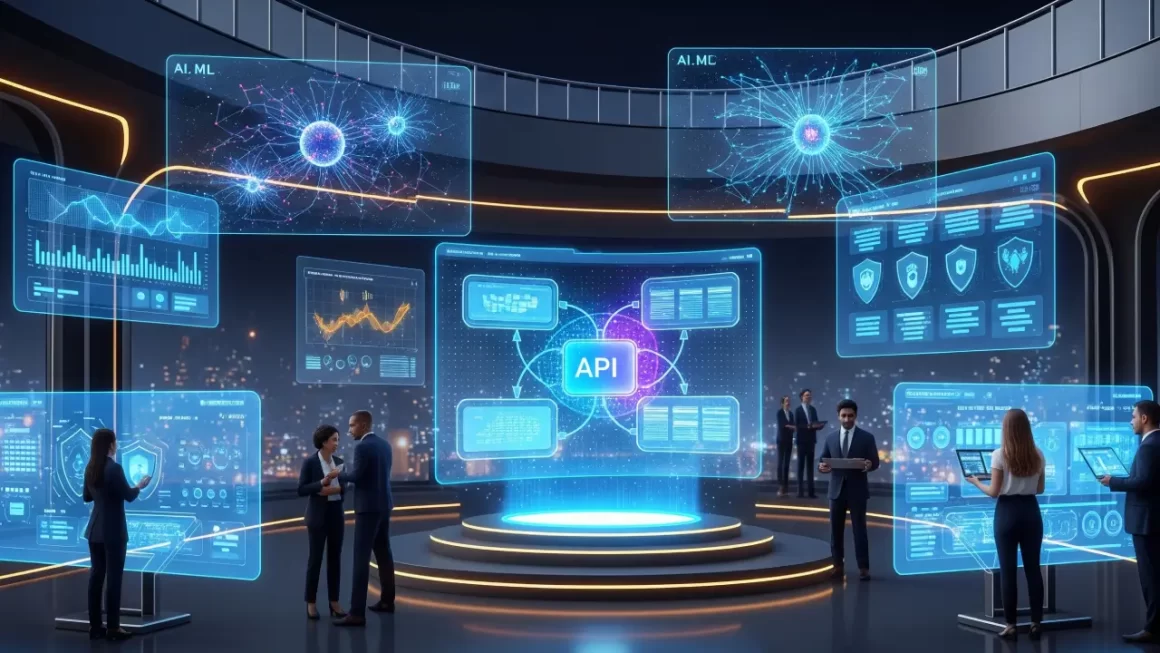
- AI & ML-Powered APIs: APIs are getting smarter. The next wave of innovation involves embedding artificial intelligence and machine learning directly into API functionalities. Think APIs that offer intelligent personalization, advanced data analysis, or automated decision-making, turning your services from simple data providers into dynamic, intelligent partners.
- A Deeper Focus on Observability & Security: With APIs powering everything, their reliability and security are non-negotiable. Modern API strategies demand robust observability to monitor health and performance, strict adherence to security standards like OAuth/OpenID Connect, and real-time responsiveness through technologies like WebSockets. Trust is the new currency, and it’s built on secure, observable APIs.
Your API-First Playbook: A Guide for Leaders
Driving this change requires a concerted effort across your technical leadership. Here’s how each role can champion this new paradigm:
- For CTOs: Your mission is to champion API-first development as a core business strategy. Frame it as the path to streamlining architecture, future-proofing your technology stack, reducing long-term costs, and enabling the business to scale efficiently.
- For Technical Leads: You are the architects of this vision. Your focus should be on defining robust, reusable, and modular API contracts early in the process. By establishing these blueprints, you empower your teams to work in parallel and ensure the foundation is solid enough for future growth.
- For Developers: You bring the vision to life. Embrace the mindset of treating APIs as first-class products. Leverage automation, modern tooling, and design-first thinking to not only build great APIs but also to create a world-class developer experience for anyone who consumes them.
Your Future-Proof Strategy Starts Here
Embracing API-first development is no longer just a good idea—it is the fundamental strategy for building software that lasts. It’s the difference between building on sand and building on solid rock. By prioritizing a design-first approach, you are not just optimizing a workflow; you are investing in a future of scalability, efficiency, and continuous innovation. The architectural choices you make today, guided by an API-first philosophy, will directly shape the success and resilience of your digital ecosystem for tomorrow.
Cut costs, launch faster, scale smarter—the API-first way starts here. Contact Our Team
Don’t stop here—discover more in our latest blog –
Conversion by Design: Real Data on UI/UX Design Impact
Feeling Left Behind? Your Friendly Guide to Digital Transformation for SMEs in 2025
10 Signs Your Shopify Store Isn’t Working — And How to Fix Them Fast
Post Views: 996