

The world of online shopping has tilted on its axis, and it’s pointing directly at the smartphone in your customer’s hand. If you’re running an e-commerce business, understanding mobile commerce is no longer optional—it’s the core of your survival and growth. With a staggering 59% of all global e-commerce sales now flowing through mobile devices, this shift represents a monumental $2.51 trillion opportunity in 2025.
This isn’t just a fleeting trend; it’s a fundamental reshaping of consumer behavior. Businesses that fail to adapt to this mobile-first reality are not just losing an edge; they are becoming invisible to the majority of their potential market. This guide provides a comprehensive deep dive into the mobile commerce landscape and a strategic roadmap for you to not only compete but dominate.
The Mobile Commerce Explosion: The Numbers Don’t Lie
The statistics paint an undeniable picture of mobile’s complete dominance in the digital marketplace. This data isn’t just for market reports; it’s a clear signal telling you where your customers are and where your focus needs to be.
- Unstoppable Market Growth: The mobile commerce market is on a meteoric rise, projected to surge from $2.51 trillion today to an incredible $4.01 trillion by 2027.
- A Global Shopping Phenomenon: Nearly one-third of the world’s digital population, totaling 1.65 billion people, are active mobile shoppers.
- The Primary Channel for Traffic: Mobile devices are now responsible for over 77% of all retail website traffic worldwide. If your site isn’t optimized for these visitors, you’re alienating the vast majority of your audience from their very first click.
- A Decade of Hyper-Growth: The sector has expanded 6-fold since 2017, and by 2028, mobile sales will constitute an overwhelming 63% of all e-commerce revenue.
Apps vs. Websites: The Battle for Mobile Commerce Conversions
While a mobile-friendly website is essential, the data clearly shows that a dedicated mobile app is the undisputed champion of conversions and customer engagement. Here’s why an app isn’t a luxury but a strategic necessity.
| Metric | Mobile App | Mobile Website | The Takeaway |
| Conversion Rate | ~3.9% | ~1.5% | Apps convert users at a 157% higher rate, turning more browsers into buyers. |
| Cart Abandonment | 20% | A staggering 97% | The seamless, integrated experience of an app drastically reduces checkout friction. |
| Product Views | 4.2x More Products | 1x (Baseline) | App users are more engaged, exploring more of your catalog in a single session. |
| Average Order Value | 10-15% Higher | Baseline | The trust and ease of use in an app environment encourage larger purchases. |
| User Preference | 85% of Consumers | 15% of Consumers | Your customers have spoken: they prefer the dedicated, feature-rich experience of a mobile app. |
Export to Sheets
10 Essential Mobile Commerce Features to Drive Sales in 2025
To thrive in the mobile commerce arena, your platform must be armed with features that prioritize speed, convenience, and personalization.
Core Functionality & Checkout Optimization
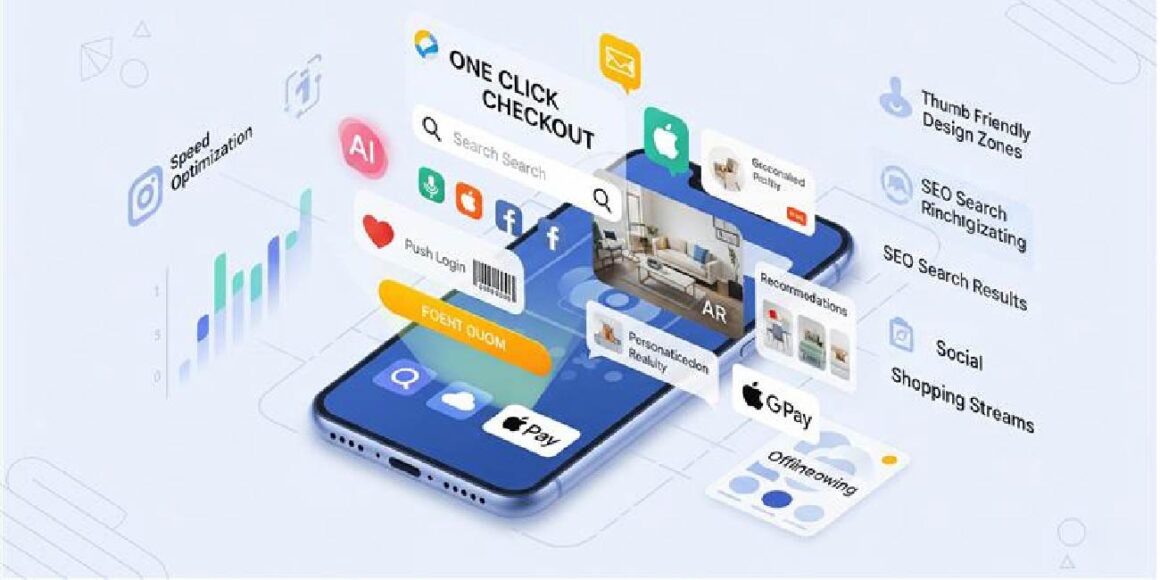
- One-Click Ordering: Eliminate friction at the most critical stage. By securely storing payment and shipping information, you allow repeat customers to purchase instantly, slashing cart abandonment rates.
- Advanced, AI-Powered Search: Modern mobile users expect intelligent search. Implement features like voice search, barcode/image scanning, and predictive autocomplete to help them find products in seconds.
- Social Logins: Simplify the registration process by allowing users to sign up with their existing Google, Facebook, or Apple accounts. This removes a significant barrier to entry for new customers.
- Guest Checkout: Don’t force a commitment. Offering a guest checkout option is crucial for capturing sales from first-time buyers who aren’t ready to create an account.
Enhanced User Experience & Engagement
- Personalized Recommendations: Leverage AI to analyze user behavior—browsing history, past purchases, items in cart—and present them with tailored product suggestions. This can boost conversion rates by up to 30%.
- Strategic Push Notifications: Go beyond generic alerts. Use push notifications for abandoned cart reminders, price drop alerts on wishlisted items, and exclusive, personalized offers to draw users back into the app.
- Augmented Reality (AR) Product Visualization: Allow customers to use their phone’s camera to “place” products like furniture or art in their own homes. This feature dramatically increases buyer confidence and reduces returns.
- Wishlists and “Save for Later”: Provide an easy-to-use wishlist function. This serves as a powerful tool for users to curate their interests and for you to gather data on product popularity and send targeted reminders.
- Offline Browsing Mode: Ensure a seamless experience even with intermittent connectivity. Allowing users to browse their previously loaded catalog or wishlist offline keeps them engaged.
- Mobile-Native Payments: Integrate frictionless payment solutions like Apple Pay and Google Pay. These options are faster, more secure, and what mobile-native users have come to expect.

Building for the Thumb: A Guide to Mobile-First Design & UX
In mobile commerce, design isn’t just about aesthetics; it’s about functionality and speed. A mobile-first approach ensures your experience is perfectly tailored to the small screen.
Technical Optimization: The Need for Speed
- Master Core Web Vitals: Google’s ranking algorithm prioritizes user experience. Focus on Largest Contentful Paint (LCP), Interaction to Next Paint (INP), and Cumulative Layout Shift (CLS).
- Sub-3-Second Loading: A staggering 53% of mobile users will abandon a site if it takes more than 3 seconds to load. Optimize images, leverage browser caching, and use a Content Delivery Network (CDN) to deliver lightning-fast performance.
- Embrace Progressive Web Apps (PWAs): PWAs offer an app-like experience directly in the browser. They load up to 85% faster than traditional mobile sites, work offline, and can send push notifications, all without requiring an app store download.
User Interface (UI) Best Practices
- Design for Thumbs: Place key navigation elements and call-to-action buttons within the “thumb-friendly zone” at the bottom and center of the screen. Ensure tap targets are at least 48×48 pixels to prevent accidental clicks.
- Simplify Navigation: Use familiar UI patterns like a hamburger menu for secondary options and a sticky navigation bar for core functions like search, cart, and home.
- Streamline Forms & Checkout: Keep forms as short as possible. Use address autocomplete APIs and automatically select the appropriate keyboard (e.g., numeric for phone numbers) to make data entry effortless.
Get Found: Advanced SEO Strategies for Mobile Commerce
Your mobile platform can be perfect, but it’s useless if no one can find it. A targeted mobile SEO strategy is essential for driving organic traffic.
- Optimize for Voice Search: Mobile users are increasingly using voice assistants to shop. Target long-tail, conversational keywords. Instead of “men’s running shoes,” optimize for “what are the best running shoes for flat feet?” Create detailed FAQ pages that directly answer these queries.
- Dominate Local “Near Me” Searches: For businesses with a physical presence, local SEO is paramount. Ensure your Google Business Profile is fully optimized, and create location-specific landing pages.
- Focus on High-Intent Keywords: Target keywords that signal a user is ready to buy. These often include transactional terms like:
- “buy [product] online”
- “best [product] under $100”
- “[brand] discount code”
- “[product] with free shipping”
- Implement Product Schema Markup: Use structured data to give search engines detailed information about your products, including price, availability, and review ratings. This enables rich snippets in search results, dramatically increasing your click-through rate.
The Future of Mobile Commerce: Trends to Watch
The evolution of mobile commerce is accelerating. Staying ahead of these trends will define the market leaders of tomorrow.
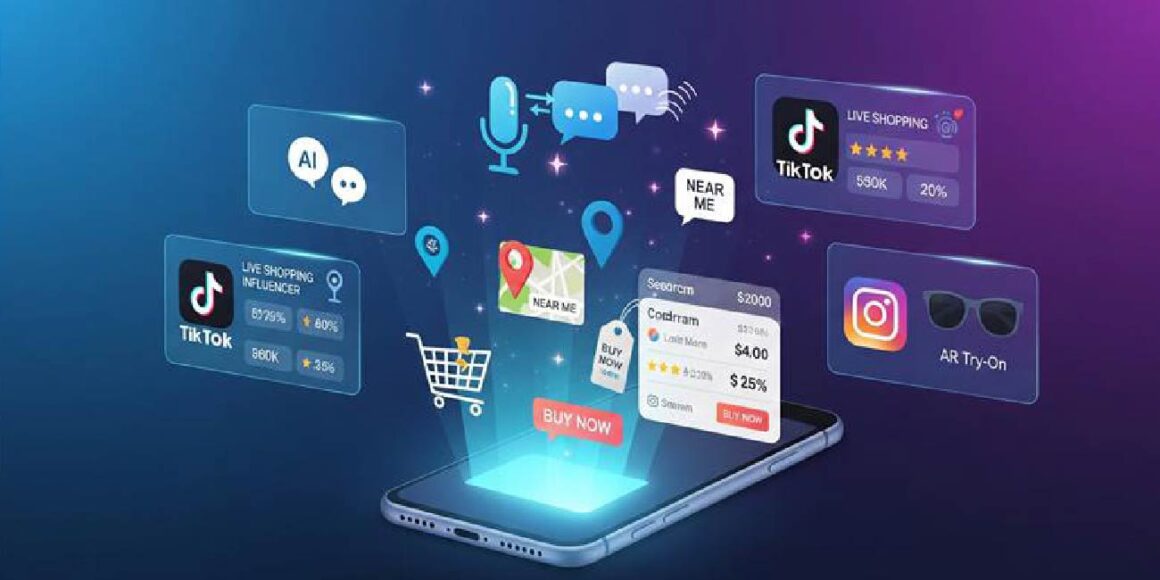
- Social Commerce: Platforms like TikTok, Instagram, and Pinterest are transforming from discovery engines into powerful sales channels. Integrated storefronts and in-app checkout are becoming standard.
- Live Shopping: This blend of entertainment and e-commerce, driven by influencers, creates a sense of urgency and community, leading to massive conversion spikes.
- AI and Hyper-Personalization: AI will move beyond simple recommendations to power fully conversational AI chatbots for customer service and create dynamically personalized user journeys for every single visitor.
- 5G Connectivity: The rollout of 5G will enable richer, faster, and more immersive experiences, making AR try-ons, high-definition video, and complex web applications instantaneous.
The Mobile-First Imperative is Here
The data is unequivocal: mobile commerce is e-commerce. With nearly two-thirds of all online sales projected to occur on a mobile device by 2028, a mobile-first mindset is no longer a competitive advantage—it is the baseline for relevance.
Success requires a holistic strategy that fuses technical excellence (speed and SEO) with a deep understanding of the mobile user’s expectations (convenience, personalization, and seamless design). Whether you choose to build a PWA, a no-code Shopify app, or a fully custom native application, the journey must begin today. The $2.51 trillion mobile commerce market is not waiting. The businesses that act decisively to capture it will be the titans of tomorrow’s retail landscape.
Ready to Dominate Mobile Commerce?
Don’t let your competition race ahead in the mobile-first world. At 18Pixels, we specialize in crafting high-performance mobile commerce solutions—from expert Shopify development to custom mobile apps—that are engineered to convert.
Let our team help you:
✅ Build a lightning-fast PWA or native mobile app.
✅ Optimize your user experience for mobile conversions.
✅ Implement AI-driven personalization and advanced features.
✅ Create a seamless, one-click checkout experience.
Schedule Your Free Mobile Commerce Strategy Consultation Today and Let’s Capture Your Share of the $2.51 Trillion Market! click Here
Don’t stop here—discover more in our latest blog –
Conversion by Design: Real Data on UI/UX Design Impact
The Iceberg Effect in Software Projects: Why Your Timeline is Wrong
API-First Development: The Blueprint for Modern Software Architecture
Payment Gateway Failures: How to Stop Losing 42% of Failed Payment Customers
Post Views: 1116