
Cloud ERP vs On-Premise ERP systems represent one of the most critical technology decisions businesses face today. For organizations seeking optimal automation capabilities, Cloud ERP vs On-Premise ERP solutions offer distinctly different advantages and challenges that can significantly impact operational efficiency and long-term scalability.
The automation capabilities of enterprise resource planning systems have evolved dramatically, with Cloud ERP vs On-Premise ERP platforms each offering unique approaches to streamlining business processes. Understanding these differences is essential for making an informed decision that aligns with your organization’s automation goals and technological infrastructure.
Understanding Cloud ERP and On-Premise ERP Systems
What is Cloud ERP?
Cloud ERP refers to enterprise resource planning software hosted on remote servers and accessed via the internet. These systems operate on a Software as a Service (SaaS) model, where the service provider manages hosting, maintenance, updates, and security. Cloud ERP solutions offer enhanced accessibility, enabling users to access the system from anywhere with an internet connection, making them particularly beneficial for remote work environments and global operations.
What is On-Premise ERP?
On-premise ERP systems are installed directly on a company’s local servers and computers. Organizations maintain complete ownership and control over their ERP infrastructure, including hardware, software, security, and maintenance responsibilities. This deployment model enables companies to customize the system extensively to meet specific business requirements while maintaining full data control.

Automation Capabilities: The Key Differentiator
Cloud ERP Automation Advantages
Advanced AI and Machine Learning Integration
Cloud ERP systems excel in incorporating cutting-edge artificial intelligence and machine learning capabilities. Oracle Fusion Cloud ERP, for example, has embedded AI throughout its suite, enabling intelligent automation and predictive analytics. These systems leverage advanced algorithms to analyze vast amounts of data, providing actionable insights and automating routine tasks.
Intelligent Process Automation
Cloud ERP platforms provide superior automation capabilities for repetitive business tasks, including payroll processing, order management, invoicing, and reporting. By automating these processes, cloud systems minimize time spent on manual data entry, reduce errors, and enable employees to focus on more strategic, value-added activities.
Real-Time Data Processing and Analytics
Modern cloud ERP systems deliver instant access to data across departments, enabling real-time reporting and faster decision-making. This capability is crucial for automation, as it allows systems to make informed decisions based on current data rather than outdated information.
Automatic Updates and Feature Enhancement
Cloud ERP providers continuously update their systems with the latest automation features and AI capabilities. These automatic updates ensure organizations always have access to the most current automation tools without requiring manual upgrades or system downtime.
On-Premise ERP Automation Challenges
Limited Innovation and Technology Updates
On-premise ERP systems often struggle with outdated technology stacks that are incompatible with newer applications and emerging technologies. This limitation significantly impacts their ability to leverage advanced automation tools like AI, machine learning, and advanced analytics.
Restricted Real-Time Processing Capabilities
Legacy on-premise systems frequently lack the ability to deliver real-time data insights due to limited processing power and outdated reporting mechanisms. This delay in accessing critical information hampers the effectiveness of automated processes and decision-making.
Manual Upgrade and Maintenance Requirements
On-premise systems require significant IT resources for upgrades, maintenance, and implementing new automation features. This manual approach to system management can delay the adoption of new automation capabilities and increase operational costs.
Cost Analysis for Automation Implementation
Cloud ERP Cost Structure
Cloud ERP systems typically require lower upfront investments, operating on subscription-based pricing models. Organizations benefit from predictable monthly or annual costs without significant hardware investments. However, subscription fees can accumulate over time, potentially making cloud solutions more expensive in the long run for some organizations.
Automation ROI Benefits
Research indicates that organizations implementing AI-enabled cloud ERP systems can achieve significant returns on investment. Key metrics include:
- 30% reduction in inventory holding costs through AI-driven demand forecasting
- 40% faster financial close processes through automated reconciliation
- 25% improvement in on-time delivery rates
On-Premise ERP Cost Considerations
On-premise deployments involve significantly higher upfront costs for licenses, implementation, and hardware infrastructure. While the initial investment is substantial, organizations with long-term commitments to the same ERP provider may experience lower total cost of ownership over time.
Hidden Automation Costs
On-premise systems often require additional investments in:
- Specialized IT personnel for automation implementation
- Hardware upgrades to support advanced automation features
- Third-party integration tools for modern automation capabilities
Security and Compliance for Automated Systems
Cloud ERP Security for Automation
Cloud ERP providers invest heavily in security infrastructure, offering enterprise-grade protection that many organizations cannot achieve independently. Advanced security features include multi-factor authentication, encryption, and continuous monitoring. Cloud providers also ensure compliance with regulations like GDPR, HIPAA, and SOX, automatically maintaining security standards as regulations evolve.
On-Premise ERP Security Considerations
On-premise systems place full security responsibility on the organization. While this provides complete control over security measures, it also requires significant investment in security infrastructure, expertise, and ongoing maintenance. Outdated on-premise systems may be more vulnerable to cyber threats due to delayed security updates.
Scalability and Future-Proofing for Automation
Cloud ERP Scalability Advantages
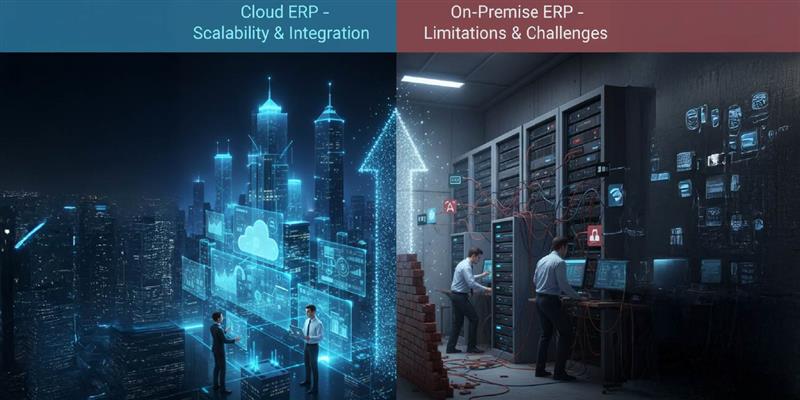
Cloud ERP systems offer superior scalability for automation initiatives. Organizations can easily adjust resources, add new automation features, and expand system capabilities without substantial infrastructure investments. This flexibility is particularly valuable as automation requirements evolve and grow.
On-Premise ERP Scalability Limitations
On-premise systems face significant scalability challenges, requiring hardware upgrades and extensive reconfiguration to support new automation capabilities. The rigid infrastructure of these systems cannot easily accommodate increasing automation demands without substantial time and cost investments.
Integration Capabilities for Comprehensive Automation
Cloud ERP Integration Excellence
Cloud ERP systems excel in integration capabilities, seamlessly connecting with various business applications, IoT devices, and third-party automation tools. This interconnectedness enables comprehensive automation workflows that span multiple business functions and external systems.
On-Premise ERP Integration Challenges
Legacy on-premise systems often struggle with integration due to outdated APIs and incompatible architecture. This limitation significantly impacts the ability to create comprehensive automation solutions that require data sharing across multiple platforms.
Industry-Specific Automation Considerations
Manufacturing Automation
Cloud ERP systems provide advanced manufacturing automation capabilities, including:
- AI-driven demand forecasting and inventory optimization
- Real-time production monitoring and quality control
- Predictive maintenance scheduling
- Integrated supply chain automation
Financial Services Automation
Cloud ERP platforms offer sophisticated financial automation features:
- Automated invoice processing with intelligent document recognition
- AI-driven cash flow forecasting
- Anomaly detection in financial transactions
- Automated compliance reporting
Implementation Best Practices for Automation Success
Cloud ERP Implementation Strategy
Organizations should follow these best practices for successful cloud ERP automation implementation:
Comprehensive Planning and Assessment
- Conduct thorough business process analysis
- Define clear automation objectives and success metrics
- Develop detailed project timelines with phased approaches
Data Preparation and Migration
- Clean and organize existing data to eliminate inaccuracies
- Establish data governance protocols for ongoing accuracy
- Engage dedicated data migration teams
Employee Training and Change Management
- Provide comprehensive training programs for new automation features
- Ensure strong stakeholder buy-in and communication
- Create dedicated support teams for post-implementation assistance
On-Premise ERP Automation Enhancement
Organizations with existing on-premise systems can improve automation through:
Technology Modernization
- Regular system updates and patches
- Integration with cloud-based automation tools
- Implementation of robotic process automation (RPA) solutions
Process Optimization
- Documentation of all automated processes
- Regular monitoring and performance analysis
- Continuous improvement initiatives
Future Trends in ERP Automation
Emerging Technologies
The future of ERP automation will be shaped by several key trends:
Artificial Intelligence and Machine Learning
- Advanced predictive analytics and forecasting
- Autonomous decision-making capabilities
- Natural language processing for intuitive user interfaces
Internet of Things (IoT) Integration
- Real-time inventory tracking through connected sensors
- Predictive maintenance based on equipment data
- Automated supply chain optimization
Blockchain Technology
- Enhanced transaction security and transparency
- Tamper-proof audit trails for compliance
- Automated smart contracts for business processes
Making the Right Choice for Your Organization
When Cloud ERP is the Better Choice for Automation
Cloud ERP systems are ideal for organizations that:
- Require rapid deployment of automation capabilities
- Need access to cutting-edge AI and machine learning features
- Want to minimize IT infrastructure investments
- Operate in multiple locations or support remote work
- Require frequent system updates and new automation features
When On-Premise ERP May Be Suitable
On-premise systems may be appropriate for organizations that:
- Have strict data sovereignty requirements
- Possess extensive IT resources and expertise
- Require highly customized automation solutions
- Operate in industries with specific compliance requirements
- Have made significant investments in existing infrastructure
The Automation Advantage Goes to Cloud ERP
When evaluating Cloud ERP vs On-Premise ERP for automation capabilities, cloud-based solutions emerge as the clear winner for most organizations. Cloud ERP systems offer superior automation features, including advanced AI integration, real-time processing capabilities, automatic updates, and seamless scalability.
The evidence overwhelmingly supports cloud ERP for automation-focused implementations. Organizations choosing cloud ERP benefit from continuous innovation, reduced implementation complexity, and access to cutting-edge automation technologies that drive operational efficiency and competitive advantage.
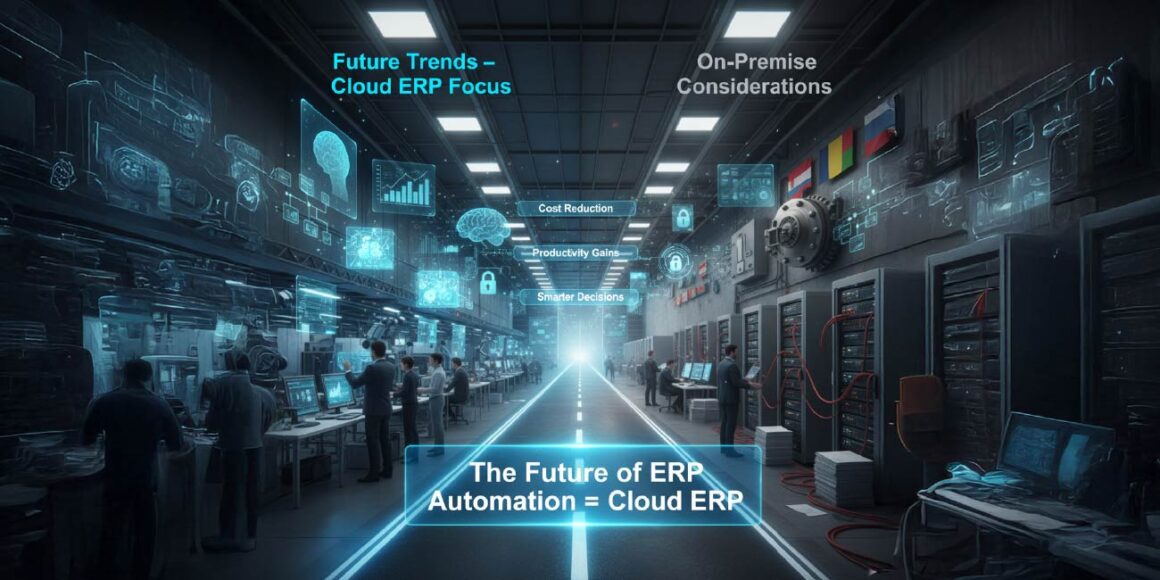
While on-premise systems may still serve specific use cases requiring maximum control and customization, the future of ERP automation clearly lies in cloud-based solutions. Companies seeking to maximize their automation potential should seriously consider cloud ERP as their platform of choice for digital transformation and operational excellence.
As demonstrated by successful implementations across various industries, cloud ERP systems provide the foundation for comprehensive automation strategies that drive measurable business results, including cost reductions, productivity improvements, and enhanced decision-making capabilities. The question is no longer whether to automate, but how quickly organizations can leverage cloud ERP to achieve their automation goals.
FAQ
What’s the key difference between Cloud ERP and On-Premise ERP for automation?
Cloud ERP delivers automatic updates, real-time data processing, and built-in AI workflows, while On-Premise ERP requires manual upgrades and local IT maintenance.
Why is Cloud ERP better for automation?
It offers rapid deployment, seamless scalability, and advanced AI/ML features without hardware investments.
Can On-Premise ERP still automate processes?
Yes—through RPA integrations and custom scripts—but it demands more IT resources and manual updates.
How do costs compare?
Cloud ERP has lower upfront fees and subscription pricing; On-Premise ERP involves higher initial investments and ongoing infrastructure costs.
Is my data secure in Cloud ERP?
Top Cloud ERP providers ensure enterprise-grade security and regulatory compliance, reducing your security management burden.
Don’t stop here—discover more in our latest blog –
Why n8n Automation Is the Future for Growing Businesses
The Iceberg Effect in Software Projects: Why Your Timeline is Wrong
API-First Development: The Blueprint for Modern Software Architecture
Payment Gateway Failures: How to Stop Losing 42% of Failed Payment Customers
Post Views: 678