
Modern businesses face unprecedented challenges in managing operations efficiently while staying competitive. Data silos, manual errors, and time-consuming processes are holding companies back from achieving their full potential. ERP automation (Enterprise Resource Planning) capabilities are emerging as the solution that can transform these operational challenges into competitive advantages.
The Current State of Business Operations Without ERP
Organizations operating without integrated ERP systems commonly struggle with several critical issues that directly impact their bottom line. Data silos remain one of the most significant challenges, with teams working on different tools and lacking a single source of truth. This fragmentation leads to inconsistent information across departments and delayed decision-making processes.
Manual errors continue to plague businesses that rely heavily on Excel spreadsheets and human input for critical operations. Research shows that automating workflows can reduce errors by 70%, highlighting the substantial improvement potential when moving from manual to automated systems.
The impact of these inefficiencies is substantial. Companies without proper automation face time-consuming processes, delays in approvals and reporting, and lack of real-time insights for decision-making. These operational bottlenecks result in high operational costs, with repeated tasks leading to wasted resources and reduced competitiveness.

Understanding ERP Automation: Beyond Traditional Management Tools
Enterprise Resource Planning systems represent a fundamental shift from traditional management approaches. Unlike conventional tools that operate in isolation, ERP systems integrate all business functions into a single, unified platform. This integration enables seamless data flow across departments and automates complex business processes that previously required manual intervention.
The transformation is particularly evident when comparing ERP capabilities with traditional management solutions:
| Feature | ERP Systems | Traditional Tools |
| Integration | Centralized platform for all departments | Separate tools for different functions |
| Data Access | Real-time, unified updates | Manual updates with outdated information risk |
| Automation | Comprehensive workflow automation | Mostly manual tasks |
| Scalability | Easily scales with business growth | Limited capacity and flexibility |
| Collaboration | Cross-departmental integration | Often leads to silos and miscommunication |

Modern ERP systems eliminate the need for multiple software licenses and reduce maintenance costs by consolidating various business functions into one comprehensive solution. This consolidation results in a 15-25% reduction in operational costs for small and medium enterprises, making ERP an attractive investment for businesses seeking efficiency gains.
Key Business Processes Transformed by ERP Automation
Financial Management and Accounting
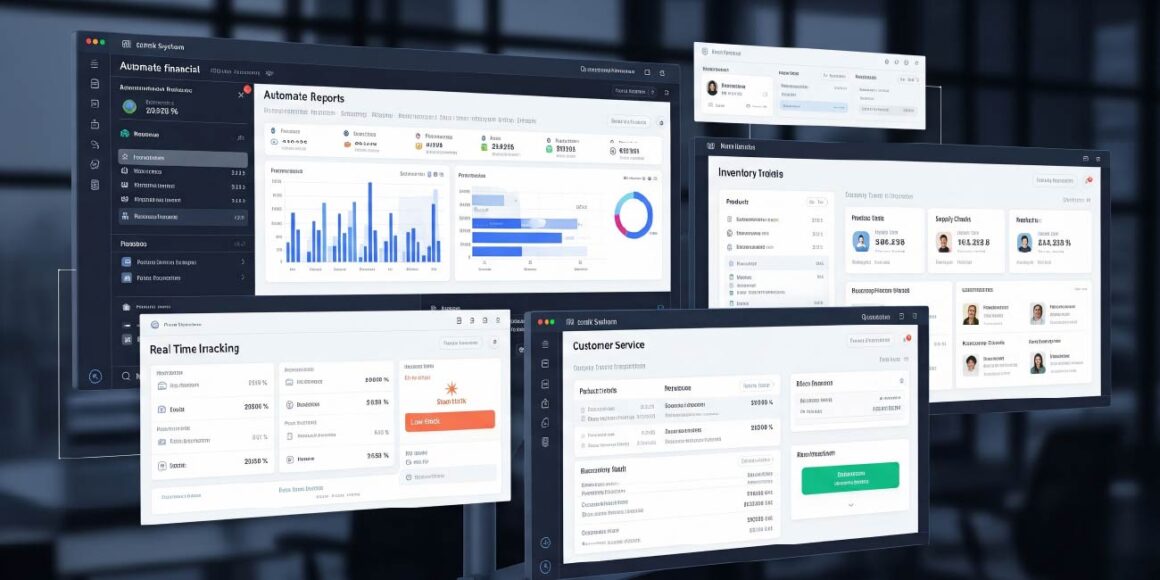
ERP automation revolutionizes financial processes by streamlining invoicing, payment processing, and financial reporting. 89% of ERP buyers consider accounting as the primary feature they seek, reflecting the critical importance of automated financial management. These systems eliminate manual bookkeeping errors and accelerate payment cycles, directly improving cash flow and reducing administrative overhead.
Inventory and Supply Chain Management
67% of businesses prioritize inventory and distribution modules when selecting ERP systems, recognizing automation’s impact on supply chain efficiency. ERP systems provide real-time inventory tracking, automated reorder points, and predictive stock management capabilities. This automation addresses the common pain point of poor inventory management that leads to overstocking or stockouts affecting revenue.
Customer Relationship Management
ERP systems integrate CRM functionalities, enabling businesses to automate customer service processes and improve order processing efficiency. This integration addresses customer service issues by eliminating delays in order processing and reducing billing errors while providing complete visibility into customer interactions.
Production and Manufacturing
In manufacturing environments, ERP automation optimizes production scheduling, quality control, and equipment maintenance. AI-powered ERP systems are expected to reduce operational costs by up to 30% and improve forecasting accuracy by 50%, demonstrating the significant impact of intelligent automation on manufacturing operations.
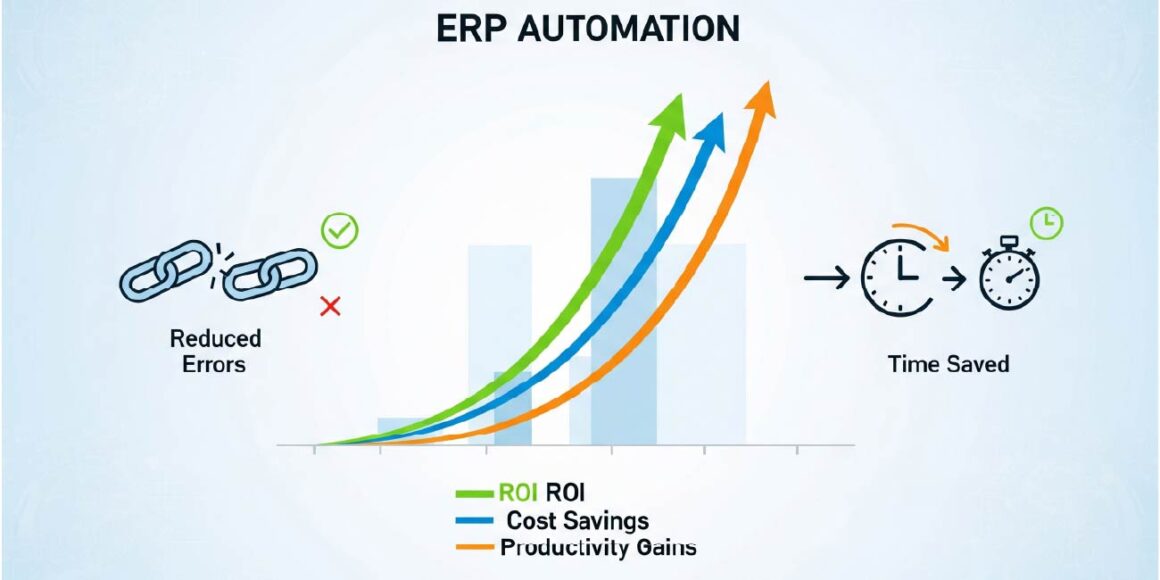
The ROI of ERP Automation: Measurable Business Impact
The financial benefits of ERP automation are substantial and well-documented. The average ROI for an ERP project is 52%, meaning for every dollar invested in an ERP system, businesses see an average return of $1.52. This return typically materializes within 2.5 years on average, with approximately 82% of companies achieving ROI within their expected timeframe.
Key areas where ERP delivers measurable returns include:
Operational Cost Reduction: Businesses implementing ERP systems experience significant cost savings through process optimization and resource efficiency. Research shows that businesses leveraging automation within their ERP systems see a 30% increase in productivity and a 23% reduction in operational costs.
Productivity Improvements: 91.7% of enterprises that completed their ERP projects report overall success, with 50% of organizations implementing ERP systems reporting significant improvements in most business processes. An additional 43.8% note enhancements in crucial business processes.
Error Reduction: ERP systems significantly improve operational accuracy. ERP reduces manual errors by 70%, enhancing data quality and reducing costly mistakes that can impact customer satisfaction and compliance.
Time Savings: Automation frees up hundreds of hours of manual work, allowing employees to focus on strategic activities that drive business growth rather than repetitive administrative tasks.
Cloud ERP vs On-Premise: Which Delivers Better Automation?
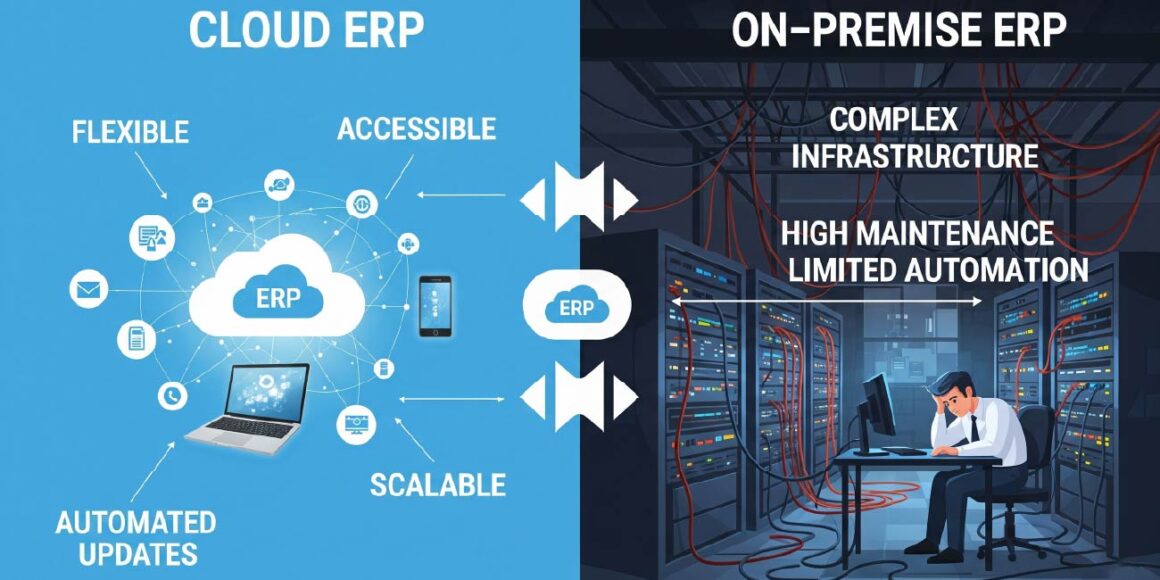
The choice between cloud and on-premise ERP solutions significantly impacts automation capabilities and implementation success. Cloud-based ERP solutions are expected to account for 60% of the total ERP market by 2025, reflecting the growing preference for cloud-based automation.
Cloud ERP Advantages for Automation
Accessibility and Flexibility: Cloud ERP systems enable automation from anywhere with internet connectivity, supporting remote work and distributed operations. This mobility ensures that automated processes continue running regardless of employee location.
Scalability: Cloud solutions offer elastic scalability on-demand, allowing businesses to adjust automation capabilities as they grow without significant infrastructure investments. This scalability addresses the common challenge of existing systems not supporting business growth.
Automatic Updates: Cloud ERP providers continuously push upgrades that include new automation features, ensuring businesses always have access to the latest technological capabilities without manual intervention.
Cost Efficiency: Cloud deployment eliminates the need for expensive hardware and IT maintenance, with subscription-based pricing models making advanced automation accessible to SMEs.
On-Premise ERP Considerations
While on-premise solutions offer greater control over data and customization, they typically require significant upfront investment and continuous investments for upgrades. Two-thirds of mid-sized business operations are running obsolete versions of their ERP software, limiting their access to modern automation capabilities.
SMEs and ERP Automation: Leveling the Playing Field
Small and medium enterprises particularly benefit from ERP automation, as it enables them to compete with larger organizations without proportional increases in overhead. 53% of businesses consider ERP as a priority investment, with SMEs leading adoption in manufacturing and distribution industries.
Cost Benefits for SMEs
ERP automation provides SMEs with several cost advantages:
- Reduced IT overhead: Cloud-based solutions eliminate the need for dedicated IT infrastructure
- Lower operational costs: 15-25% reduction in operational costs through process optimization
- Improved resource allocation: Automation allows SMEs to maximize productivity with limited staff
Scalability Solutions
ERP systems designed for SMEs are inherently scalable, allowing businesses to start with core modules and add functionality as they grow. This modular approach ensures that SMEs can grow without facing technological bottlenecks or requiring complete system overhauls.
The Future of ERP Automation: AI and IoT Integration
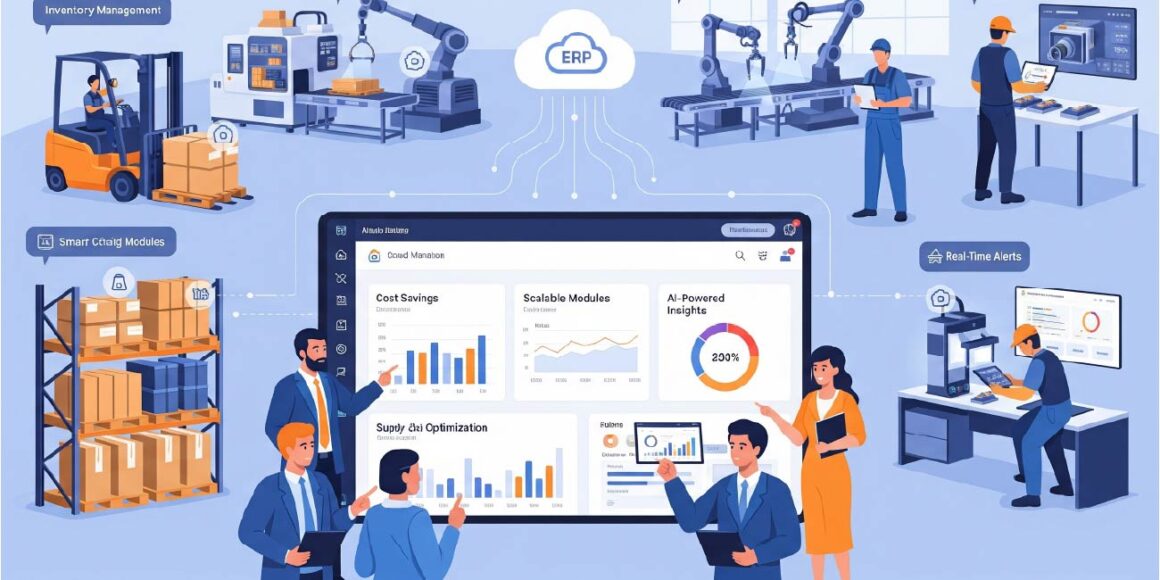
The future of ERP automation lies in the integration of artificial intelligence and Internet of Things technologies. 65% of ERP vendors are expected to integrate AI and machine learning capabilities into their platforms by 2025 to enhance forecasting, analytics, and approval processes.
AI-Powered Automation
AI-enabled ERP systems provide several advanced automation capabilities:
- Predictive Analytics: AI algorithms analyze real-time data to provide actionable insights and recommendations
- Intelligent Decision-Making: Systems can make autonomous decisions based on predefined criteria and historical patterns
- Natural Language Processing: Voice activation and natural language interactions streamline user experiences
IoT Integration Benefits
The integration of IoT with ERP systems creates new automation opportunities:
- Smart Inventory Management: Sensors automatically update inventory levels and trigger reordering processes
- Predictive Maintenance: IoT sensors monitor equipment health and schedule maintenance proactively
- Real-time Quality Control: Automated quality monitoring throughout production processes
Overcoming Common ERP Implementation Challenges
While the benefits of ERP automation are substantial, successful implementation requires addressing common challenges:
Data Quality and Migration
For the fourth consecutive year, managers report that problems with data quality are among the biggest surprises during transformation. 47% of respondents consider reviewing and improving data quality a crucial technical measure in the transformation process.
Change Management and User Adoption
86% of transformation projects now utilize agile or hybrid project management methods, reflecting the need for flexibility during implementation. The most critical success factor identified by managers is organizational continuity in the project team.
Integration Challenges
51% of businesses believe that integration problems hold them back from leveraging their data to achieve business goals. Proper planning and phased implementation approaches help address these integration challenges.
Getting Started with ERP Automation
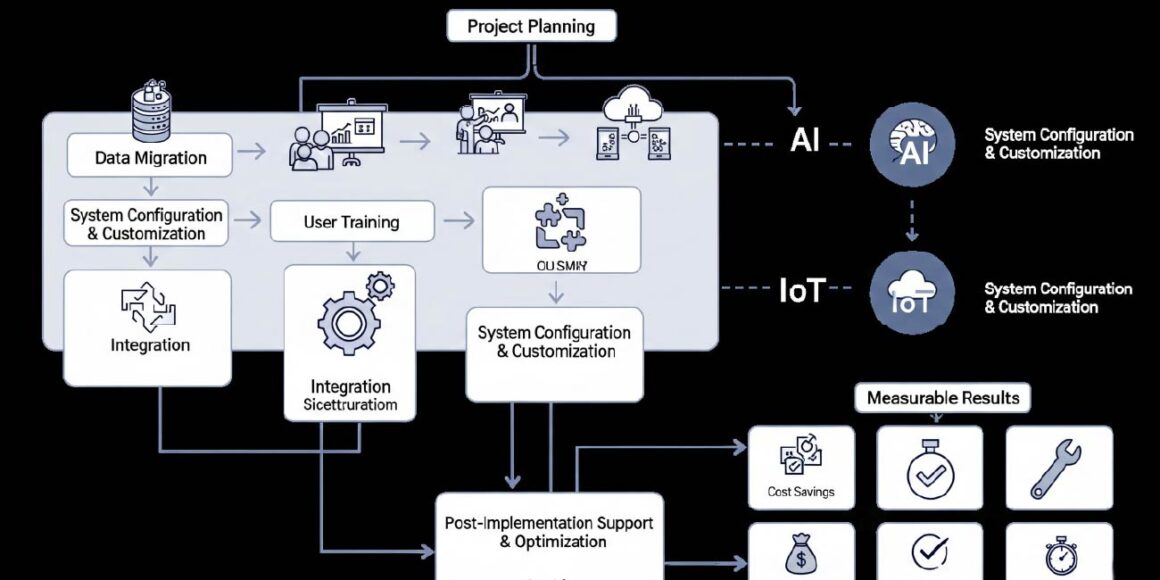
Organizations considering ERP automation should follow a structured approach:
Assessment Phase
- Identify Pain Points: Document current operational inefficiencies and manual processes
- Define Objectives: Establish clear goals for automation and expected ROI
- Evaluate Current Systems: Assess existing technology infrastructure and integration requirements
Selection and Implementation
- Choose the Right Solution: Select cloud or on-premise based on business needs and growth plans
- Plan Implementation: 49% of companies go live according to schedule, emphasizing the importance of realistic planning
- Focus on Training: Ensure adequate user training to maximize adoption and system utilization
Measuring Success
Track key performance indicators to measure automation success:
- Process efficiency improvements
- Error reduction metrics
- Cost savings achieved
- User productivity gains
- Customer satisfaction improvements
The Imperative for ERP Automation
ERP automation represents more than a technological upgrade—it’s a fundamental transformation of how businesses operate. With 93% of organizations reporting their ERP projects as successful, the evidence strongly supports ERP automation as a critical investment for business growth and competitiveness.
The integration of ERP systems with automation technologies addresses the core operational challenges that hold businesses back: eliminating data silos, reducing manual errors, accelerating processes, and providing real-time insights for informed decision-making. As AI and IoT technologies continue advancing, ERP systems will become even more intelligent and autonomous, offering unprecedented opportunities for operational excellence.
Organizations that embrace ERP automation today position themselves to thrive in an increasingly competitive and digitally-driven marketplace. The question is no longer whether to implement ERP automation, but rather how quickly businesses can transform their operations to realize these substantial benefits.
For SMEs and large enterprises alike, ERP automation offers a clear path to operational efficiency, cost reduction, and sustainable growth. The time to act is now—the future belongs to businesses that can operate with the speed, accuracy, and intelligence that only automated ERP systems can provide.
From strategy to execution, we’ve got you covered. Let’s get started
FAQ
What is ERP automation and why is it important for businesses?
ERP automation integrates all core business processes—finance, inventory, supply chain, CRM, and production—into a single system. It reduces manual errors, improves efficiency, and provides real-time insights for faster decision-making.
How does ERP automation reduce costs?
By consolidating multiple tools, automating workflows, and improving resource allocation, ERP systems cut operational costs by 15–25% and reduce manual errors by up to 70%.
What business processes benefit most from ERP automation?
Key areas include financial management, inventory & supply chain, CRM, production scheduling, and reporting. Automation in these areas boosts productivity, accuracy, and customer satisfaction.
Which is better: Cloud ERP or On-Premise ERP?
Cloud ERP is more cost-efficient, scalable, and easier to update, making it ideal for SMEs. On-premise ERP offers greater control and customization but requires higher upfront investment and ongoing maintenance.
What ROI can businesses expect from ERP automation?
On average, companies achieve a 52% ROI, with most realizing returns within 2.5 years through cost savings, productivity gains, and faster decision-making.
Can small and medium enterprises (SMEs) benefit from ERP automation?
Yes. SMEs gain significant advantages by reducing IT costs, streamlining operations, and scaling flexibly without heavy infrastructure investments.
What challenges do businesses face when implementing ERP automation?
Common challenges include data migration, change management, and integration with existing systems. Proper planning, phased rollout, and employee training are key to success.
What role do AI and IoT play in the future of ERP?
AI enhances predictive analytics, decision-making, and natural language processing, while IoT enables smart inventory, predictive maintenance, and real-time quality control.
Don’t stop here—discover more in our latest blog –
Conversion by Design: Real Data on UI/UX Design Impact
The Iceberg Effect in Software Projects: Why Your Timeline is Wrong
API-First Development: The Blueprint for Modern Software Architecture
Post Views: 429