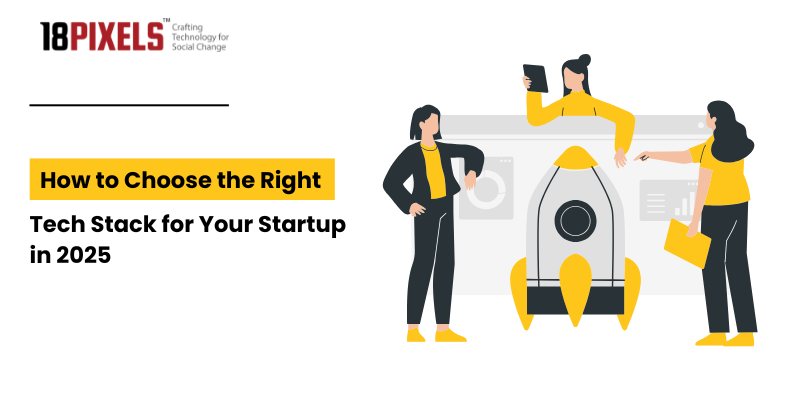

Choosing the right tech stack for your startup in 2025 can truly make or break your product. In today’s dynamic and rapidly evolving tech landscape, selecting the ideal set of tools, frameworks, and services is absolutely critical for achieving scalability, ensuring cost-efficiency, and accelerating product development velocity.
Whether you’re building a Minimum Viable Product (MVP) to test the waters or meticulously planning for global scale, your startup’s tech stack in 2025 must perfectly align with your team’s existing capabilities, your ambitious product roadmap, and your future growth projections. This guide will walk you through the essential considerations and top choices to make an informed decision.

What Exactly Is a Tech Stack?
At its core, a tech stack refers to the comprehensive combination of technologies used to build, deploy, and run a software application. It’s the full ecosystem that powers your digital product. Typically, a robust tech stack includes:
- Front-End (Client-Side): These are the technologies that users directly see and interact with in their web browsers or mobile apps. Think user interfaces, interactive elements, and overall user experience.
- Back-End (Server-Side): This is the “brain” of your application, handling data processing, managing databases, business logic, and exposing APIs for the front-end to communicate with.
- DevOps & Cloud Infrastructure: This layer encompasses the tools and services for hosting your application, setting up continuous integration and continuous deployment (CI/CD) pipelines, ensuring security, and implementing scalability solutions.
Why Choosing the Right Tech Stack Matters in 2025
In 2025, startups face heightened expectations: faster releases, superior performance, ironclad security, and stringent data privacy measures. Opting for an outdated or misaligned startup technology stack could significantly impede your progress, lead to ballooning operational costs, and rapidly accumulate technical debt. The right choices now will save you immense headaches later.
Best Front-End Stacks for Startups in 2025
The user experience is paramount. Here are the leading front-end choices for the modern startup:
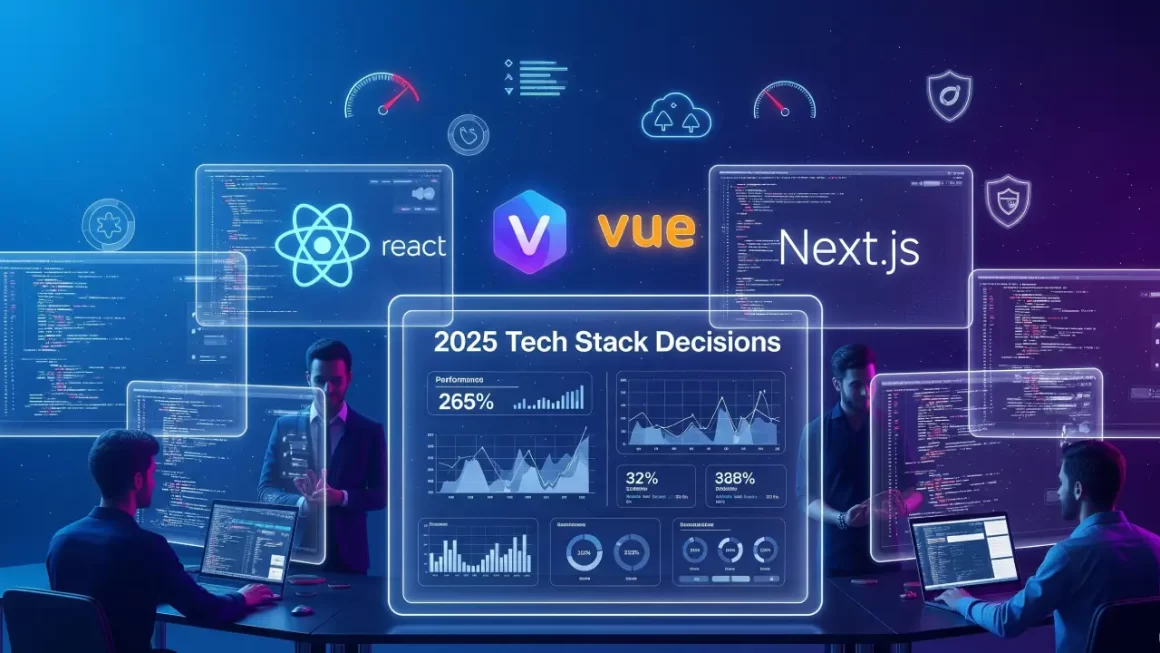
- React.js: Still a dominant force with unparalleled community support and a vast ecosystem. Ideal for complex single-page applications and interactive UIs.
- Next.js: Built on React, Next.js excels at server-side rendering (SSR) and static site generation (SSG), making it fantastic for SEO and performance-critical applications.
- Vue.js: Known for its gentle learning curve and progressive adoption, Vue.js is a fast-growing contender, offering a balance of flexibility and ease of use.
- Svelte/SolidJS: Emerging strong for their performance advantages by shifting work to compile time. Consider these for highly optimized, lightweight applications.
When making your choice, balance the need for high performance, flexibility, and the availability of skilled developers in your target hiring market.
Recommended Back-End Technologies for Your Startup in 2025
The back-end powers your application’s core functionality. Here’s a look at the top contenders:
- Node.js (with Express/NestJS): Non-blocking and event-driven, Node.js is excellent for real-time applications, APIs, and microservices. It allows for full-stack JavaScript development.
- Python (with Django/FastAPI): Python offers rapid development cycles and a rich ecosystem, particularly strong for data-intensive applications, AI/ML integrations, and MVPs. Django provides a “batteries-included” approach for speed.
- Ruby on Rails: Continues to be an excellent choice for MVPs and rapid iteration due to its convention-over-configuration philosophy, allowing for very fast development.
- Go or Rust: If raw speed, efficiency, and concurrency are your primary concerns (e.g., for high-performance microservices or systems programming), Go and Rust are increasingly popular choices.
Evaluate these options based on your team’s existing expertise, the specific performance requirements of your application, and your anticipated scalability needs.
Cloud & DevOps: Build for Scale from Day One
A modern tech stack for your startup in 2025 is incomplete without a robust cloud and DevOps strategy. Building for scalability from day one is crucial.
- Cloud Providers: The “Big Three” continue to dominate: AWS, Google Cloud, and Microsoft Azure. Choose based on specific service offerings, pricing models, and team familiarity.
- Serverless Options: Services like AWS Lambda, Google Cloud Functions, Vercel, and Netlify are ideal for lean teams and event-driven architectures, offering significant cost savings for fluctuating workloads.
- CI/CD Tools: Implement continuous integration/continuous deployment with tools like GitHub Actions, GitLab CI/CD, or CircleCI to automate your deployment pipelines and ensure rapid, reliable releases.
Adopting a cloud-native approach from the outset will optimize your deployment speed, reduce infrastructure costs, and enable seamless scalability.
Budget Considerations for Your Startup Tech Stack
Startups often operate with limited resources, making budget a key factor.
- Open-Source Tools: Leverage the power of open-source tools and frameworks whenever possible to reduce initial licensing costs.
- Scalable Pricing Models: Opt for cloud providers and services with “pay-as-you-go” or consumption-based pricing models, allowing you to scale costs with your growth.
- Avoid Vendor Lock-in: Design your architecture with modularity in mind to prevent being overly dependent on a single vendor, providing flexibility for future changes.
Start lean, but ensure your chosen stack won’t become a bottleneck or an insurmountable cost barrier as your business scales and user demand grows.
Key Takeaways: How to Choose the Right Tech Stack for Your Startup in 2025
Selecting the optimal tech stack for your startup in 2025 is a strategic decision that impacts everything from development speed to long-term maintenance.
- Align with Business Goals: Your technology choices must directly support your product roadmap, core features, and ultimate business objectives.
- Team Skillsets: Prioritize technologies that align with your current development team’s expertise. Training takes time and resources, which are often scarce for startups.
- Scalability & Viability: Opt for technologies with strong community support, active development, and proven long-term viability to ensure your stack can grow with your company.
- Lean & Future-Proof: While speed to market is crucial, don’t sacrifice future flexibility. Build for change, not just for the immediate launch, by adopting modular architectures.
By carefully considering these factors, you can build a resilient, efficient, and scalable foundation for your startup’s success in the competitive landscape of 2025 and beyond.
Schedule Your Strategy Session with – Contact 18Pixels
Don’t stop here—discover more in our latest blog –
18Pixels Nonprofit CRM Solutions
AI in E-commerce
10 Signs Your Shopify Store Isn’t Working — And How to Fix Them Fast
Post Views: 618