
UI/UX design directly impacts conversion rates more than most businesses realize. From the very first impression a user gets of your brand to the smallest micro-interactions within your digital product, your website or app’s design can be the pivotal factor that determines your conversion success or failure.
If you’re currently struggling with high bounce rates, low engagement, or stagnant sales, your user experience might be the silent killer of your growth—or, conversely, the powerful key to unlocking significant new revenue. This post dives into the undeniable connection between design and business success, offering real UX case studies and actionable insights.
Why UI/UX Design Fundamentally Impacts Conversion Rates
In today’s hyper-digital world, customers don’t just expect—they demand—seamless, intuitive, and visually appealing interfaces. Their patience is thin, and their options are plentiful. Research consistently shows that investing in superior design yields tangible business benefits:
- 88% of online users are less likely to return to a website after a bad user experience.
- Well-designed UI (User Interface) can significantly boost website conversion rates by up to 200%.
- An intuitive UX (User Experience) can improve mobile app or website conversion rates by an astounding 400%.
The clear takeaway? Better design doesn’t just look good; it translates directly into better business outcomes and increased revenue. It’s how UI/UX design impacts on sales.

Real-World Examples of Design-Driven Conversion Growth
Businesses across industries have seen dramatic improvements by strategically enhancing their UI/UX. Here are a few compelling examples that illustrate how UI affects conversion:
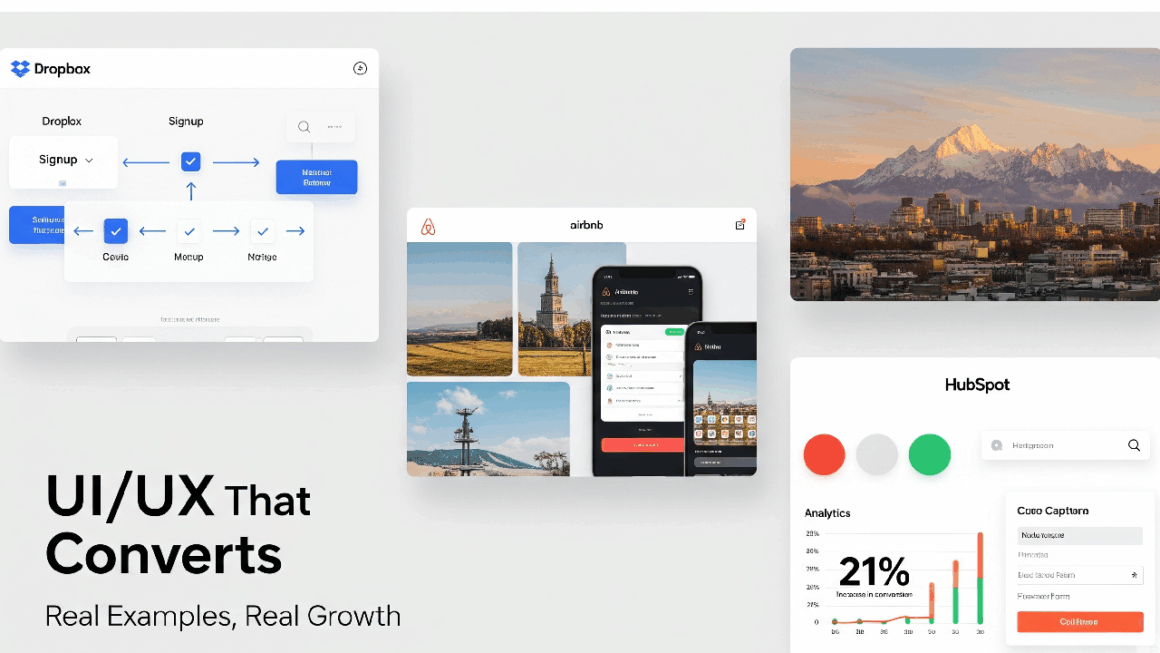
- Dropbox: Simplified Onboarding Increased Signups Dropbox famously revolutionized its onboarding process by stripping away complexity and reducing friction during user signup. Through a focus on minimal design and a clear value proposition, they dramatically boosted user acquisition and solidified their market position. This shows the direct UI/UX impact on sales through efficient user flow.
- Airbnb: Data-Backed UI Tweaks Increased Bookings Airbnb’s continuous optimization of its platform’s UI and UX has been a core part of its success. By focusing on high-quality imagery, intuitive search filters, and an optimized booking flow, they were able to significantly increase conversion rates by building trust and enhancing usability. This is a prime example of improve website conversion with UX.
- HubSpot: CTA Button Color & Placement HubSpot, a leader in inbound marketing, consistently A/B tests its website elements. In one notable instance, by changing the color of a Call-to-Action (CTA) button and simplifying a lead generation form, they observed a remarkable 21% increase in lead conversions. This highlights the power of even small design tips for higher conversion.
Key UI/UX Design Elements That Affect Conversions
Several critical design elements directly influence user behavior and, consequently, your conversion rates:
- Clear Call-to-Actions (CTAs): Buttons and links must be prominent, descriptive, and compelling, guiding users toward the desired action.
- Mobile-Responsive Layouts: With mobile-first indexing, a seamless experience across all devices is non-negotiable. Poor mobile UX drives users away.
- Fast Page Load Speeds: Every second counts. Slow loading times frustrate users and lead to high bounce rates, directly impacting conversions.
- Easy Navigation & Site Structure: Users need to find what they’re looking for quickly and intuitively. A logical flow reduces frustration and encourages exploration.
- Readable Typography & Visual Hierarchy: Content needs to be easily digestible. Proper font choices, sizes, and strategic use of white space guide the user’s eye and highlight key information.
- Trust Signals: Elements like testimonials, security badges, secure payment icons, and clear privacy policies build confidence and encourage users to complete transactions. This is fundamental for UX design for business.
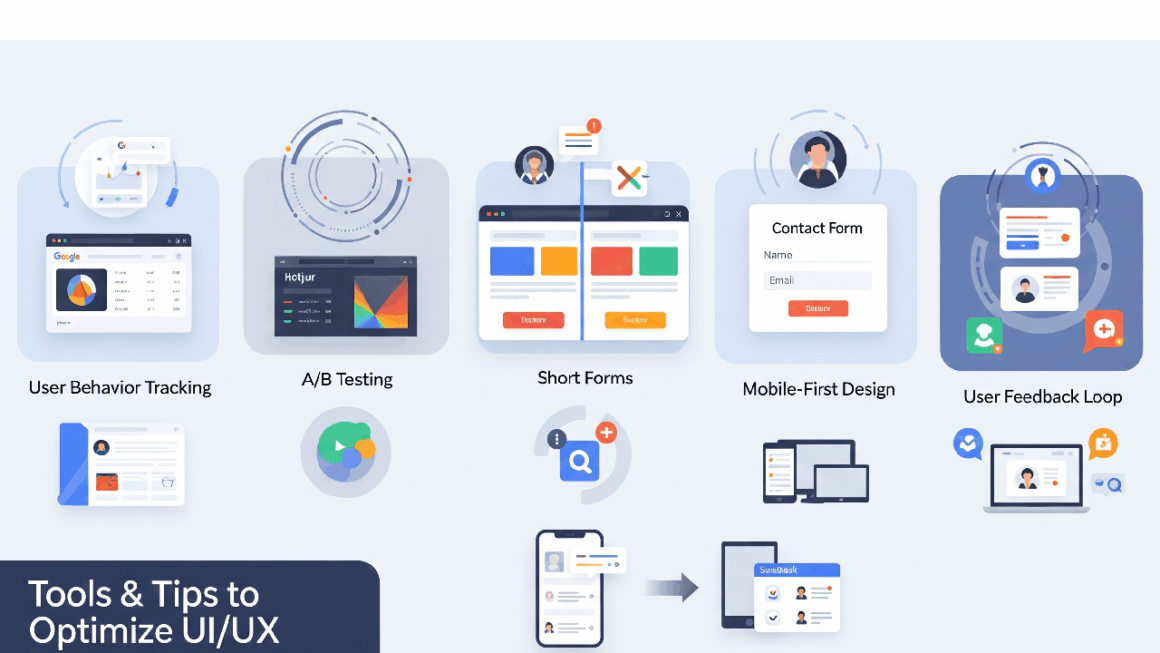
Tools & Tips to Optimize UI/UX for Better Conversions
Optimizing your UI/UX for improved conversions is an ongoing process that requires data and iteration:
- Track User Behavior: Utilize tools like Google Analytics, Hotjar, and Crazy Egg to understand how users interact with your site, identify friction points, and gather insights.
- A/B Test Everything: Don’t guess! A/B test different versions of button placements, color schemes, form layouts, headlines, and imagery to see what resonates best with your audience.
- Keep Forms Short & Sweet: Long, complex forms are notorious conversion killers. Only ask for essential information.
- Adopt a Mobile-First Design Strategy: Design for the smallest screen first, then scale up. This ensures an optimal experience for the majority of users.
- Continuously Collect Feedback: Implement surveys, user interviews, and usability testing to gather direct feedback and identify areas for improvement.
Don’t Let Bad UX Cost You Sales
Your product or service might be revolutionary, feature-rich, or incredibly valuable—but if the design creates friction, confusion, or a negative user experience, your potential customers will simply leave. This is why UI/UX design directly impacts conversion rates and must be a top priority.
Investing in better UI/UX isn’t just about making your website or app look aesthetically pleasing; it’s a proven, data-backed growth strategy that directly contributes to higher conversion rates, increased user satisfaction, and ultimately, greater business success. Prioritize your users, and watch your conversions soar.
Schedule Your UI/UX Strategy Session with – Contact 18Pixels
Identify hidden design flaws that are costing you sales—and turn them into conversion drivers.
Don’t stop here—discover more in our latest blog –
18Pixels Nonprofit CRM Solutions
AI in E-commerce
10 Signs Your Shopify Store Isn’t Working — And How to Fix Them Fast
Post Views: 1272