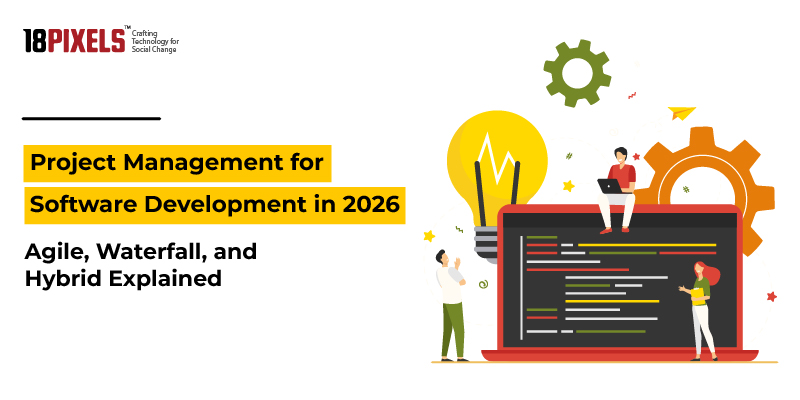

Project Management for Software Development is one of the most critical success factors for digital products in 2026. Project Management for Software Development teams today face rising complexity, tighter budgets, and increasing pressure to deliver faster without compromising quality.
Choosing the wrong project management methodology often results in delayed releases, uncontrolled scope, communication gaps, and budget overruns. At 18Pixels, we help organizations eliminate this confusion by aligning the right methodology with business objectives, technical complexity, and stakeholder expectations.

Why Project Management for Software Development Is More Complex in 2026
The modern software landscape has evolved significantly. Projects now involve cloud infrastructure, AI integrations, automation workflows, cybersecurity compliance, and globally distributed teams. Without a strong project management framework, even experienced teams struggle to maintain visibility and control.
Key challenges include:
- Constantly changing requirements
- Cross-functional collaboration issues
- Stakeholder misalignment
- Risk management in fast-moving environments
- Balancing speed with stability
Effective Project Management for Software Development ensures that innovation does not come at the cost of predictability.
Agile Project Management for Software Development: Built for Change
Agile Project Management for Software Development focuses on flexibility, customer collaboration, and iterative delivery. Instead of delivering the entire product at the end, Agile teams release functional increments in short cycles known as sprints.
How Agile Works
- Development is divided into 2–4 week sprints
- Requirements evolve through continuous feedback
- Stakeholders stay involved throughout the project
- Teams prioritize high-value features first
When Agile Is the Right Choice
Agile is ideal when:
- Product requirements are unclear or evolving
- Speed to market is critical
- Continuous user feedback is required
Agile Challenges in Real-World Projects
Despite its benefits, Agile can fail without discipline. Poor backlog grooming, unclear sprint goals, or weak leadership can lead to scope creep and missed timelines. At 18Pixels, we bring structured Agile execution—ensuring flexibility without chaos.
Waterfall Project Management for Software Development: Control and Clarity
Waterfall Project Management for Software Development follows a sequential, phase-driven approach where each stage is completed before moving to the next.
Typical Waterfall Phases
- Requirements gathering
- System design
- Development
- Testing
- Deployment & maintenance
When Waterfall Works Best
Waterfall is effective when:
- Requirements are clearly defined upfront
- Regulatory compliance is mandatory
- Budget and timeline must be fixed
Limitations of Waterfall
Late-stage changes are expensive and time-consuming. That’s why 18Pixels strengthens Waterfall execution with early risk analysis, stakeholder validation, and controlled change management.
Hybrid Project Management for Software Development: A Strategic Balance
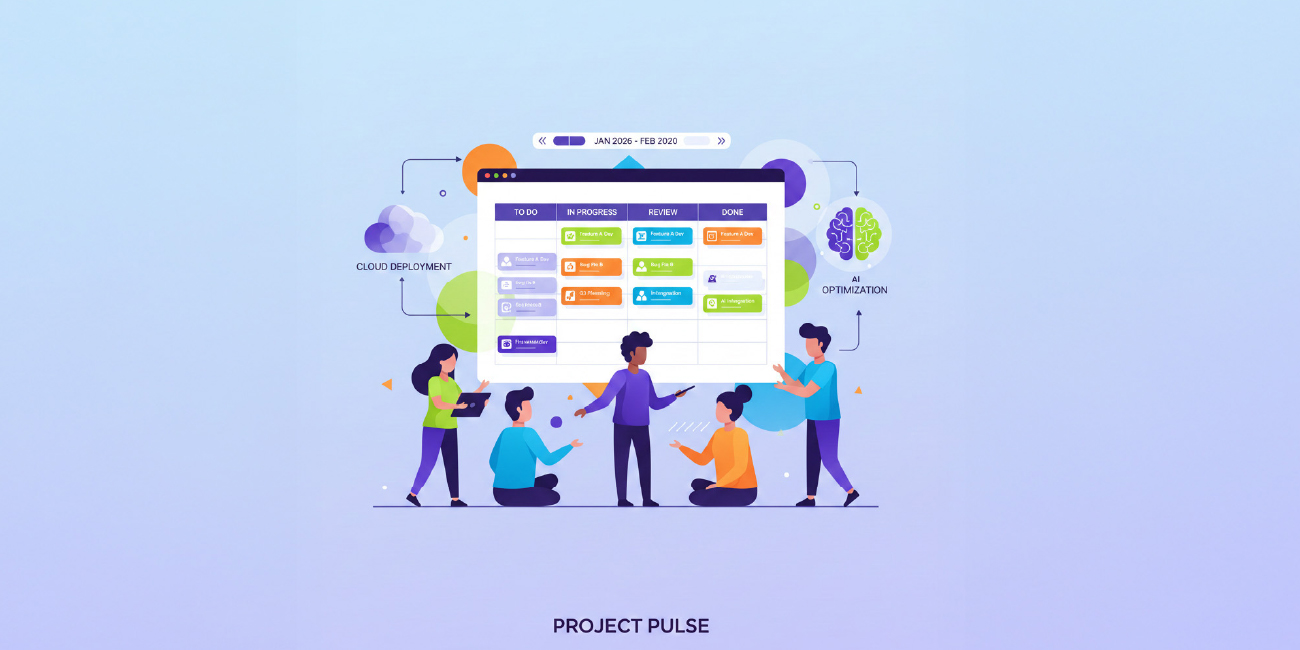
Hybrid Project Management for Software Development blends Waterfall’s structured planning with Agile’s adaptability. This model has become increasingly popular in 2026 as organizations seek both control and flexibility.
How Hybrid Works
- High-level planning follows Waterfall
- Development and testing follow Agile sprints
- Governance and reporting remain structured
Best Use Cases for Hybrid
Hybrid is ideal for:
- Large enterprise applications
- Digital transformation projects
- Multi-team, multi-vendor environments
At 18Pixels, we customize hybrid frameworks instead of applying rigid templates—ensuring alignment with real-world project needs.
Agile vs Waterfall vs Hybrid: Methodology Comparison Chart
| Aspect | Agile | Waterfall | Hybrid |
| Planning Style | Adaptive | Fixed | Semi-adaptive |
| Change Handling | Easy | Difficult | Controlled |
| Risk Management | Continuous | Early-stage | Balanced |
| Stakeholder Involvement | High | Low | Moderate |
| Delivery Speed | Fast & incremental | Slow & final | Controlled & phased |
| Best Fit | Dynamic products | Fixed-scope projects | Complex enterprise systems |
Decision Framework: Choosing the Right Project Management Methodology
Selecting the right approach in Project Management for Software Development requires answering a few critical questions:
Choose Agile if:
- Requirements will evolve
- Customer feedback is frequent
- Innovation speed matters
Choose Waterfall if:
- Scope is fixed and documented
- Compliance and approvals are required
- Predictability is the top priority
Choose Hybrid if:
- Project size is large and complex
- Multiple stakeholders are involved
- You need flexibility with governance
18Pixels uses this decision framework to reduce risk and ensure delivery confidence.
How 18Pixels Excels in Project Management for Software Development
At 18Pixels, we treat Project Management for Software Development as a strategic function, not just operational execution.
Our Core Strengths
- Methodology selection tailored to business goals
- Transparent stakeholder communication
- Proactive risk identification and mitigation
- Strict scope and change control
- Data-driven progress and performance tracking
This approach allows us to consistently deliver high-quality software within agreed timelines and budgets.
Common Project Management Mistakes We Help Avoid
- Adopting Agile without readiness
- Locking scope too early in dynamic projects
- Poor communication between business and tech teams
- Lack of risk visibility
- Uncontrolled scope expansion
Our structured frameworks eliminate these pitfalls.
The Future of Project Management for Software Development
In 2026 and beyond, Project Management for Software Development will increasingly rely on:
- AI-powered forecasting and reporting
- Automated sprint and resource planning
- Hybrid methodologies as the standard
- Outcome-based delivery models
Organizations that adapt early will gain a competitive advantage.

There is no universally “best” methodology in Project Management for Software Development—only the right fit for your project. Agile, Waterfall, and Hybrid each deliver value when applied strategically.
With 18Pixels, you gain a partner that understands how to balance speed, quality, risk, and scalability—ensuring long-term success.
Ready to streamline your software project delivery?
Connect with 18Pixels today and let our experts design the right project management strategy for your business.
Click Now
FAQs:
It is the process of planning, executing, and controlling software projects to deliver quality results on time and within budget.
Agile for flexibility, Waterfall for fixed scope, and Hybrid for complex enterprise projects.
When requirements change frequently and fast delivery is needed.
Yes, for projects with clear requirements and strict compliance needs.
A mix of Agile and Waterfall that balances flexibility and control.
It reduces risks, controls scope, and ensures timely delivery.
18Pixels selects the right methodology and ensures clear communication and risk control.
Don’t stop here—discover more in our latest blog –
Full-Stack Web Development in 2025: Technologies Every Business Should Know
Cloud-Native vs On-Premise: What You Really Need to Know in 2026
n8n vs Zapier vs Make (Integromat): A Complete Workflow Automation Tool Comparison
Post Views: 292