
The Security Audit Your Business Can’t Afford to Skip — Understanding VAPT before hackers strike is essential for every modern business. In an increasingly digital world, running a regular VAPT audit can mean the difference between data safety and catastrophic breach.
What is VAPT?
Vulnerability Assessment and Penetration Testing (VAPT) combines two cybersecurity strategies — vulnerability assessment (VA) and penetration testing (PT) — to thoroughly evaluate an organization’s security posture.
- Vulnerability Assessment (VA): Automated or semi-automated scanning to detect known vulnerabilities, misconfigurations, outdated components, and common exposures.
- Penetration Testing (PT): Ethical hackers simulate real-world attacks to attempt exploiting vulnerabilities — testing if and how weak points can be used maliciously.
Together, these form a comprehensive audit that not only reveals weaknesses but also shows their exploitability — making VAPT far more effective than simple automated scans.

Why VAPT Is Critical — The Risks of Skipping It
Growing Cyber Threats and Evolving Attack Vectors
Cyberattacks are no longer simple or unsophisticated — hackers use advanced techniques, exploit unpatched vulnerabilities, misconfigurations or logic flaws, and often chain multiple vulnerabilities to breach systems.
Relying only on firewalls, antivirus, or periodic superficial checks won’t catch these deeper threats. VAPT helps you catch vulnerabilities before they’re exploited.
Protection of Sensitive Data & Customer Trust
For businesses dealing with user data, financial transactions, or confidential information — a data breach can lead to serious financial loss, reputation damage, customer distrust, and legal liabilities.
VAPT helps secure your infrastructure, prove due diligence, and demonstrate a commitment to data protection and security compliance.
Compliance & Regulatory Readiness
Many compliance frameworks and data protection standards — including global norms and domain-specific regulations — require regular security audits. VAPT reports serve as documentation that your systems have been tested thoroughly against vulnerabilities.
This is especially relevant if your business is in fintech, healthcare, e-commerce, or serves regulated clients. VAPT helps ensure you meet compliance standards and avoid penalties.
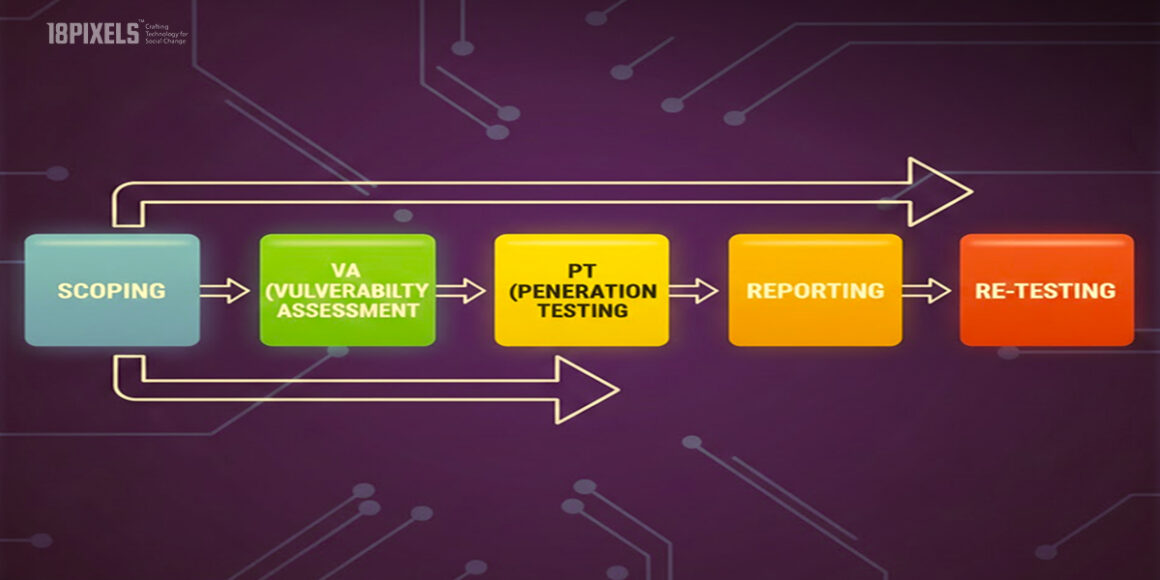
What a VAPT Audit Typically Looks Like — Process Overview
Here’s a typical structure of a VAPT audit process:
Who Needs VAPT — Is It Only for Big Companies?
No — VAPT is relevant for any business that uses digital infrastructure, web applications, customer data, or online services. Whether you are a small startup, SME, or enterprise, skipping VAPT leaves you vulnerable.
Particularly for sectors like fintech, healthcare, e-commerce, SaaS, or businesses handling sensitive user data — VAPT is practically mandatory.
Furthermore — in the Indian context — many service providers now offer VAPT services tailored for SMEs and startups at cost-effective rates.

When and How Often Should You Conduct VAPT
- Before Launching New Applications / Websites / Features — any new system, integration or major update should be VAPT-tested before going live.
- Periodically (every 6–12 months) — regular VAPT ensures newly introduced vulnerabilities or misconfigurations (e.g. via updates) are caught.
- After Significant Changes — server migrations, infrastructure changes, cloud adoption, or third-party integrations warrant a fresh VAPT.
- Post-Incident — if there is a suspected breach or unusual activity, VAPT can help identify exploited vulnerabilities and prevent future attacks.
Why Skipping VAPT Could Be Costly
In a world where cyber threats evolve rapidly, relying solely on basic security measures is like locking your front door but leaving the windows open. VAPT offers a systematic, proactive way to find and fix vulnerabilities — before attackers find and exploit them.
For business owners, IT managers, and startups: The security audit you can’t afford to skip is VAPT. Prioritizing regular VAPT audits is one of the smartest investments you can make — for protecting data, user trust, compliance, and long-term business continuity.
Secure Your Business Today — Book Your VAPT Audit with 18Pixels – Click Now
Protect your data, customers, and reputation before threats strike.
FAQs
What is VAPT?
VAPT stands for Vulnerability Assessment and Penetration Testing — a process to find and fix security weaknesses.
Why is VAPT important?
It protects your business from cyberattacks by identifying vulnerabilities before hackers exploit them.
How often should VAPT be done?
Every 6–12 months, and after major system updates or new feature launches.
Who needs VAPT?
Any business with a website, app, cloud system, or customer data.
Does VAPT affect system performance?
No, VAPT is done in a controlled environment to avoid system downtime.
What do you get after a VAPT test?
A detailed report with vulnerabilities, risk levels, and fix recommendations.
Is VAPT expensive?
Cost varies, but it’s far cheaper than dealing with a data breach.
Don’t stop here—discover more in our latest blog –
Full-Stack Web Development in 2025: Technologies Every Business Should Know
Mobile-First or Mobile-Last? Why 62% of Your Traffic Demands a Mobile-Optimized Website
Gramik eCommerce Case Study: How an Agri-Tech Ecommerce Platform Scaled Rural Commerce With Farmer Intelligence & Logistic Integration
Post Views: 209